Vasundhra - Author at Anthroholic - Anthropologist

Vasundhra

Vasundhra began her journey as an anthropologist in India, drawn to people, their stories, traditions, and ancestry. Her work has taken her from tribal villages and nomadic landscapes to advanced laboratories studying the human past, where she witnessed how deeply culture, environment, and policy shape health outcomes. Her fieldwork with pastoral nomads in Leh-Ladakh revealed how climate change quietly erodes livelihoods and health security, while her research at BITS Pilani during the COVID-19 pandemic explored the psychosocial dimensions of resilience and well-being. These experiences shaped her conviction that health is inseparable from its social and cultural context. Transitioning into policy research, she worked on a project on affordable generic medicines in Karnataka, collaborating with doctors, entrepreneurs, and communities to evaluate India’s largest public health initiative. This experience underscored for her the systemic barriers to healthcare access and the need for policies informed by lived realities. Now pursuing a Master’s in Global Health at the University of Geneva, Switzerland and complementing it with courses in environmental economics and food sustainability at the Graduate Institute, Vasundhra continues to bridge anthropology and policy. Her work reflects a commitment to advancing health equity by addressing the social, cultural, and structural determinants that shape human well-being.
Animatism is a complex anthropological concept that concerns the attribution of a generalized, impersonal supernatural power or influence to animals, objects, or phenomena. The concept was initially developed by anthropologist R.R. Marett in 1900, who proposed that animatism is essentially the belief in a widespread, non-personal supernatural power.

Animatism

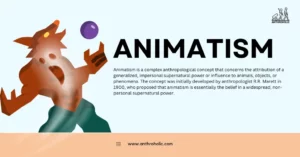
Animatism is a complex anthropological concept that concerns the attribution of a generalized, impersonal supernatural power or influence to animals, objects, or phenomena. The concept was initially developed by anthropologist R.R. Marett in 1900, who proposed that animatism is essentially the belief in a widespread, non-personal supernatural power.

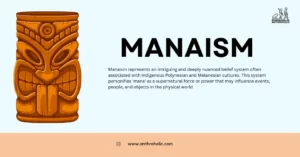
Manaism represents an intriguing and deeply nuanced belief system often associated with indigenous Polynesian and Melanesian cultures. This system personifies 'mana' as a supernatural force or power that may influence events, people, and objects in the physical world

Manaism

Manaism represents an intriguing and deeply nuanced belief system often associated with indigenous Polynesian and Melanesian cultures. This system personifies 'mana' as a supernatural force or power that may influence events, people, and objects in the physical world

Bongaism is a lesser-known religious belief system, primarily prevalent among certain tribal communities in India, notably the Santal and Munda tribes of Jharkhand, Odisha, and West Bengal. Derived from the word 'Bonga,' which means 'spirit' or 'deity' in the local language, this tribal religion has managed to retain its distinctness despite significant societal changes.

Bongaism

Bongaism is a lesser-known religious belief system, primarily prevalent among certain tribal communities in India, notably the Santal and Munda tribes of Jharkhand, Odisha, and West Bengal. Derived from the word 'Bonga,' which means 'spirit' or 'deity' in the local language, this tribal religion has managed to retain its distinctness despite significant societal changes.

Naturalism implies the application of empirical observation, experimentation, and the scientific method to the understanding of human beings. It aims to generate a 'natural' account of human society, grounded in the physical and biological world.

Naturalism

Naturalism implies the application of empirical observation, experimentation, and the scientific method to the understanding of human beings. It aims to generate a 'natural' account of human society, grounded in the physical and biological world.

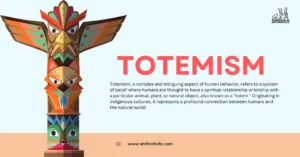
Totemism, a complex and intriguing aspect of human behavior, refers to a system of belief where humans are thought to have a spiritual relationship or kinship with a particular animal, plant, or natural object, also known as a "totem."

Totemism

Totemism, a complex and intriguing aspect of human behavior, refers to a system of belief where humans are thought to have a spiritual relationship or kinship with a particular animal, plant, or natural object, also known as a "totem."

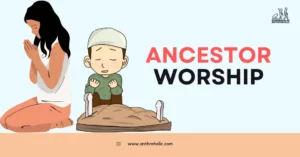
Ancestor worship, also referred to as ancestor veneration, refers to the ritual practice of showing respect and dedication to one's departed family members. This custom, deeply rooted in many cultures globally, manifests in various forms ranging from ceremonies and rituals to monuments and daily offerings.

Ancestor Worship

Ancestor worship, also referred to as ancestor veneration, refers to the ritual practice of showing respect and dedication to one's departed family members. This custom, deeply rooted in many cultures globally, manifests in various forms ranging from ceremonies and rituals to monuments and daily offerings.

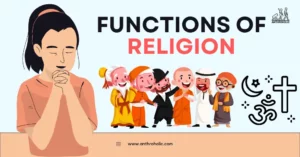
Religion, as a potent social force, forms the bedrock of many societies, often guiding individual behavior and shaping cultural norms. It serves multiple purposes, including making sense of the world, providing emotional solace, cementing societal bonds, and maintaining order.

Functions of Religion

Religion, as a potent social force, forms the bedrock of many societies, often guiding individual behavior and shaping cultural norms. It serves multiple purposes, including making sense of the world, providing emotional solace, cementing societal bonds, and maintaining order.

Three central elements of magic: The practitioner, the practical aim, and the magical formula. These elements are integral to the understanding and practice of magic across a wide range of cultures, forming a framework that helps anthropologists analyze the significance of magic in society.

Elements of Magic

Three central elements of magic: The practitioner, the practical aim, and the magical formula. These elements are integral to the understanding and practice of magic across a wide range of cultures, forming a framework that helps anthropologists analyze the significance of magic in society.

Ayurveda, stemming from the Sanskrit words 'Ayur' meaning life and 'Veda' meaning science, is an ancient Indian medical system that encompasses more than physical health, extending to the mental and spiritual realms of well-being.

Ayurveda

Ayurveda, stemming from the Sanskrit words 'Ayur' meaning life and 'Veda' meaning science, is an ancient Indian medical system that encompasses more than physical health, extending to the mental and spiritual realms of well-being.

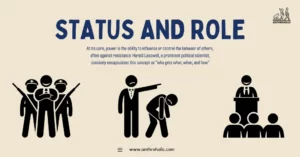
The interplay of status and role helps shape the complexity of human interaction. One's status determines the expectations and roles they need to fulfill. Simultaneously, the roles one undertakes can impact their status within the society.

Status and Role

The interplay of status and role helps shape the complexity of human interaction. One's status determines the expectations and roles they need to fulfill. Simultaneously, the roles one undertakes can impact their status within the society.

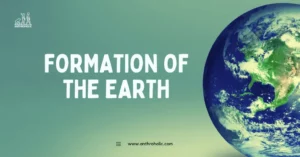
Understanding the formation of Earth is a key to grasping our planetary history and the processes that have led to our present condition. Our planet came into existence approximately 4.54 billion years ago, formed from the dust and gas of the nascent solar system.

Formation of Earth

Understanding the formation of Earth is a key to grasping our planetary history and the processes that have led to our present condition. Our planet came into existence approximately 4.54 billion years ago, formed from the dust and gas of the nascent solar system.

An artifact is an object made, altered, or used by humans. Artifacts span a wide spectrum from stone tools to pottery fragments, from bone needles to ancient manuscripts. These objects, often excavated from archaeological sites, serve as windows to past societies.

Artifacts

An artifact is an object made, altered, or used by humans. Artifacts span a wide spectrum from stone tools to pottery fragments, from bone needles to ancient manuscripts. These objects, often excavated from archaeological sites, serve as windows to past societies.