
AI Answer Evaluation Platform Live Now. Try Free Answer Evaluation Now

Herbert Spencer
Herbert Spencer was a towering figure in Victorian intellectual life, a polymath who sought to explain the workings of the universe-from biology and psychology to ethics and society-through a unified theory of evolution. A self-taught thinker without formal academic training, Spencer nevertheless became one of the most widely read philosophers of the 19th century, rivaling even Charles Darwin in influence and controversy.
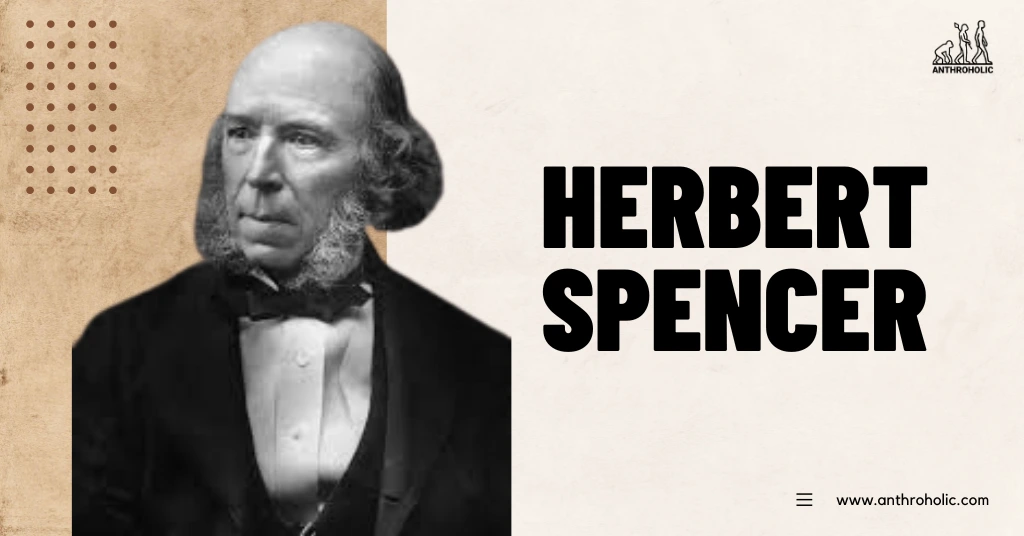
Often associated with the phrase “survival of the fittest,” Spencer applied evolutionary ideas to human society, economics, and politics, shaping debates in sociology, education, and governance. His ambitious project, known as “Synthetic Philosophy,” aimed to unify knowledge under a single framework grounded in natural laws. Though later criticized for promoting what became known as Social Darwinism, Spencer’s work played a foundational role in establishing sociology as a discipline and influenced generations of scientists, reformers, and political thinkers.
His legacy is complex: part pioneer, part cautionary tale. But there is no doubt that Spencer helped define the intellectual contours of the modern world.
Early Life and Education
Herbert Spencer was born on April 27, 1820, in Derby, England, into a family with strong nonconformist religious and political views. His father, William George Spencer, was a schoolteacher with a deep interest in mathematics and a firm believer in individual liberty, free thought, and anti-authoritarian principles. These ideas would have a lasting impact on young Herbert.
Spencer received no formal university education, a fact that set him apart from many of his Victorian peers. Instead, his education was eclectic and self-directed. He briefly attended schools run by his father and uncle but was largely homeschooled. His uncle, the Reverend Thomas Spencer, helped instill a foundational knowledge of the sciences and introduced him to empirical reasoning and utilitarian ideas, especially those of Jeremy Bentham.
As a young man, Spencer trained and worked as a civil engineer, particularly on railway projects during the booming Industrial Revolution. This early exposure to the practical application of scientific principles would deeply inform his later writings, especially his insistence on systematizing knowledge in a way similar to the physical sciences.
Entry into Intellectual Life
Spencer transitioned into journalism and writing in the 1840s, joining the staff of The Economist, a liberal publication where he honed his skills as a social and political commentator. In 1851, he published his first major work, Social Statics, where he argued that human society evolves toward greater freedom and moral development, guided by natural laws.
This work introduced one of his enduring themes: the importance of individual liberty and minimal government intervention. Spencer believed that human progress was best achieved when individuals were free to pursue their own development without state interference-views that resonated with the laissez-faire liberalism of the time.
His exposure to Charles Darwin’s theory of natural selection, published in On the Origin of Species in 1859, had a profound effect. Although Spencer had already been developing his own evolutionary ideas, Darwin’s biological model helped validate Spencer’s broader philosophical claims. In fact, Spencer coined the term “survival of the fittest” in 1864, in his book Principles of Biology, as a way to describe the mechanism of natural evolution-which he then extended to social and economic systems.
Major Theoretical Contributions
Spencer’s grand intellectual project was the creation of a system of “Synthetic Philosophy,” which sought to unify all branches of knowledge-from biology and psychology to sociology, ethics, and politics-under a single evolutionary framework.
Key concepts of his theory included:
- Universal Evolution: Spencer argued that everything in the universe evolves from simple to complex forms, following a common pattern of differentiation and integration.
- Social Evolution: He believed societies evolve from militant, hierarchical systems to industrial, voluntary forms of cooperation.
- Individualism: Spencer maintained that progress depended on personal liberty and minimal state control, aligning him with classical liberalism.
- Functionalism: In sociology, he treated societies like biological organisms, composed of interdependent parts working to maintain social order and stability.
Spencer’s multidisciplinary approach made him one of the first thinkers to attempt a scientific study of society. He played a central role in founding the field of sociology, influencing figures such as Émile Durkheim, William Graham Sumner, and early American social theorists.
However, his application of biological evolution to social policy-especially his belief that aiding the poor or unfit interfered with natural selection-would later attract strong criticism and contribute to the problematic ideology known as Social Darwinism.
Public Career and Influence
By the mid-to-late 19th century, Herbert Spencer had become one of the most prominent public intellectuals in both Britain and the United States. His ideas found a receptive audience among industrialists, classical liberals, and those who championed free markets and minimal government. He was viewed by many as a philosopher of progress-an advocate of reason, evolution, and modernity.
Spencer’s appeal extended far beyond academia. His works were widely read by educated laypeople, and he was admired by political figures, reformers, and capitalists alike. In the United States, he was celebrated by figures such as Andrew Carnegie, who praised Spencer’s emphasis on individual self-improvement and the moral justification of wealth accumulation.
Despite declining invitations to university posts-including an offer from Harvard-Spencer’s reputation flourished. He was elected to the Royal Society and received honorary degrees from several institutions. His philosophical system was translated into multiple languages, and his books were international bestsellers.
Yet, Spencer was not without critics. Many contemporaries, including T. H. Huxley, admired his early work but criticized his later writings as rigid and excessively deductive. His tendency to extrapolate evolutionary theory to almost every aspect of human life invited controversy and overreach.
Major Works and Intellectual Legacy
Spencer’s intellectual legacy is anchored by a systematic body of writing, most notably his ten-volume series titled “System of Synthetic Philosophy”, published between 1862 and 1896. This ambitious project sought to integrate knowledge from all disciplines into a unified philosophical framework. Key volumes include:
- First Principles (1862): Introduced his general theory of evolution and laws of cosmic development.
- The Principles of Biology (1864-1867): Applied evolutionary theory to life sciences, where he coined “survival of the fittest.”
- The Principles of Psychology (1855, revised 1870-1872): Helped establish psychology as a scientific discipline.
- The Principles of Sociology (1876-1896): One of the first comprehensive sociological treatises, analyzing the structure and function of societies.
- The Principles of Ethics (1879-1897): Explored morality through the lens of evolutionary development and individual liberty.
In The Study of Sociology (1873), Spencer outlined the goals and methods of sociology as a science, paving the way for later theorists like Durkheim and Weber to refine and challenge his ideas. Though his version of evolutionism eventually fell out of favor, the idea of studying society as a system with functional interdependencies influenced later structural functionalism.
However, Spencer’s legacy was tarnished by his association with Social Darwinism, even though he never used the term himself. His opposition to social welfare, support for laissez-faire economics, and belief that societal aid could hinder evolutionary progress were later used-sometimes inaccurately-to justify inequality, racism, and imperialism.
Later Years, Death, and Legacy
In his later years, Herbert Spencer continued writing, though his health began to decline. He struggled with chronic insomnia and nervous ailments, which he had battled for much of his adult life. Despite these issues, he remained intellectually active well into old age. He lived modestly in Brighton and later in London, increasingly withdrawing from public life as his influence began to wane in academic circles.
Spencer died on December 8, 1903, at the age of 83. He was buried in Highgate Cemetery in London, near the grave of Karl Marx-an ironic proximity given their opposing worldviews on society, progress, and economics.
Retrospective Recognition
By the early 20th century, Spencer’s popularity had sharply declined. His version of evolutionism came to be seen as overly deterministic and lacking empirical grounding, and the rise of modernist, empiricist, and Marxist approaches to sociology rendered much of his work outdated. Additionally, the misuse of his ideas to justify imperialism, racism, and economic inequality severely damaged his reputation-particularly in the wake of two world wars.
Yet Spencer’s historical importance is undeniable. He helped institutionalize sociology as a discipline, inspired early efforts at psychology and systems theory, and was among the first to articulate a comprehensive evolutionary philosophy that attempted to unify all knowledge.
In recent years, scholars have revisited Spencer’s work with greater nuance. Rather than dismissing him outright, they now examine his contributions as foundational-if flawed-efforts to grapple with the implications of scientific progress on society. His emphasis on complexity, systems thinking, and social adaptation finds echoes in contemporary debates about globalization, social networks, and evolutionary psychology.
Though his fame may have dimmed, Herbert Spencer remains a seminal figure in the history of ideas-a bridge between Enlightenment rationalism and the scientific thinking of the modern world.
References
- Britannica. “Herbert Spencer.” https://www.britannica.com/biography/Herbert-Spencer
A comprehensive overview of Spencer’s life, including his contributions to philosophy and sociology. - Smithsonian Magazine. “The Complicated Legacy of Herbert Spencer, the Man Who Coined ‘Survival of the Fittest’.” https://www.smithsonianmag.com/science-nature/herbert-spencer-survival-of-the-fittest-180974756/
An analysis of Spencer’s impact and the controversies surrounding his ideas. - Internet Encyclopedia of Philosophy. “Spencer, Herbert.” https://iep.utm.edu/spencer/
An academic perspective on Spencer’s philosophical contributions. - ThoughtCo. “Biography of Herbert Spencer.” https://www.thoughtco.com/herbert-spencer-3026492
A summary of Spencer’s life and his role in developing sociological theory. - Stanford Encyclopedia of Philosophy. “Herbert Spencer.” https://plato.stanford.edu/entries/spencer/
In-depth scholarly article on Spencer’s philosophy and its significance. - Find a Grave. “Herbert Spencer.” https://www.findagrave.com/memorial/2609/herbert-spencer
Details of Spencer’s burial and memorial.

Related Posts


