Linguistic Anthropology

Linguistic Anthropology is the study of language in social and cultural contexts. This category explores how language shapes and is shaped by society, how it reflects cultural values and beliefs, and how it influences our thoughts, actions, and experiences. Discover the rich diversity of languages, their evolution, and the impact they have on human interaction.

Language and physiological modifications are deeply interlinked. Language, as a socio-cultural invention, has not only shaped our physiology over evolutionary timescales but continues to alter our brains and perceptions throughout our lives.

Language and Physiological Modifications

Language and physiological modifications are deeply interlinked. Language, as a socio-cultural invention, has not only shaped our physiology over evolutionary timescales but continues to alter our brains and perceptions throughout our lives.


The interplay of signs, symbols, and language offers a fascinating lens to understand the complexities of human culture and social interaction. By delving into the world of symbols and language, we gain insights into how humans create meaning, shape identities, and negotiate their social realities.

Signs Symbols and Language

The interplay of signs, symbols, and language offers a fascinating lens to understand the complexities of human culture and social interaction. By delving into the world of symbols and language, we gain insights into how humans create meaning, shape identities, and negotiate their social realities.

The three fundamental features of linguistic communication - productivity, displacement, and arbitrariness, play a unique and pivotal role in shaping the way we use and perceive language, contributing to its dynamism and adaptability.

Features of Linguistic Communication

The three fundamental features of linguistic communication - productivity, displacement, and arbitrariness, play a unique and pivotal role in shaping the way we use and perceive language, contributing to its dynamism and adaptability.

Applied Linguistics is a field of study that investigates practical issues involving language use in the real world. In other words, it addresses language-related problems in various contexts, including second language acquisition (L2), language teaching, syllabus design, and language testing and evaluation.

Applied Linguistics

Applied Linguistics is a field of study that investigates practical issues involving language use in the real world. In other words, it addresses language-related problems in various contexts, including second language acquisition (L2), language teaching, syllabus design, and language testing and evaluation.

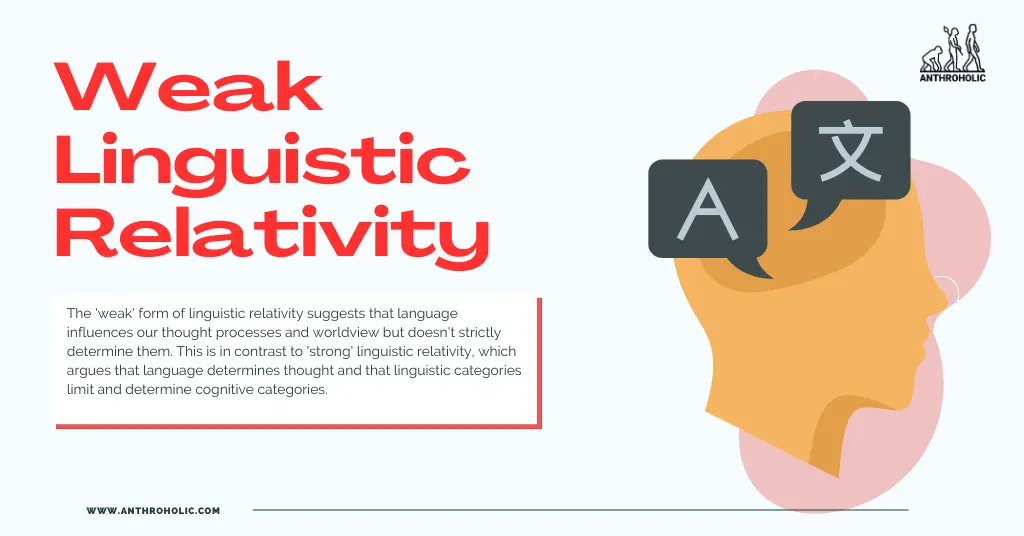
The weak linguistic relativity suggests that language influences our thought processes and worldview but doesn't strictly determine them. This is in contrast to 'strong' linguistic relativity, which argues that language determines thought and that linguistic categories limit and determine cognitive categories.

Weak Linguistic Relativity

The weak linguistic relativity suggests that language influences our thought processes and worldview but doesn't strictly determine them. This is in contrast to 'strong' linguistic relativity, which argues that language determines thought and that linguistic categories limit and determine cognitive categories.

Social dialects or sociolects are variants of language differentiated not by geographical areas (like regional dialects) but by various social parameters, such as social class, age, gender, and ethnic background.

Social Dialects

Social dialects or sociolects are variants of language differentiated not by geographical areas (like regional dialects) but by various social parameters, such as social class, age, gender, and ethnic background.

The plight of disappearing languages is a shared responsibility, requiring concerted efforts from individuals, communities, governments, and international organizations. Through collective action, we can strive to preserve the tapestry of human linguistic heritage for future generations.

Disappearing Languages

The plight of disappearing languages is a shared responsibility, requiring concerted efforts from individuals, communities, governments, and international organizations. Through collective action, we can strive to preserve the tapestry of human linguistic heritage for future generations.

Oral literature, as the term implies, refers to the cultural material and tradition transmitted orally from one generation to another. The messages or testimony are verbally transmitted in speech or song and may take the form of folktales, ballads, songs, chants, proverbs, or folklores.

Oral Literature

Oral literature, as the term implies, refers to the cultural material and tradition transmitted orally from one generation to another. The messages or testimony are verbally transmitted in speech or song and may take the form of folktales, ballads, songs, chants, proverbs, or folklores.

Linguistic analysis is the process of analyzing language by dissecting it into its various components such as phonetics, phonology, morphology, syntax, semantics, and pragmatics.

Linguistic Analysis

Linguistic analysis is the process of analyzing language by dissecting it into its various components such as phonetics, phonology, morphology, syntax, semantics, and pragmatics.

Sociolinguistics is a branch of linguistics that studies the intricate connection between language and society. It analyzes how social factors, including region, gender, age, and social class, influence the way language is used and understood.

Sociolinguistics

Sociolinguistics is a branch of linguistics that studies the intricate connection between language and society. It analyzes how social factors, including region, gender, age, and social class, influence the way language is used and understood.

Insights from animal communication studies are pivotal to the field of evolutionary linguistics, which seeks to understand the origins and evolution of language.

Animal Communication

Insights from animal communication studies are pivotal to the field of evolutionary linguistics, which seeks to understand the origins and evolution of language.