
AI Answer Evaluation Platform Live Now. Try Free Answer Evaluation Now


Evolution of Languages

The evolution of languages is a fascinating topic that offers a unique insight into the development of human societies and their communication systems.
"Exploring the Diversity of Human Culture: Insights from Anthropology"
The evolution of languages is a fascinating topic that offers a unique insight into the development of human societies and their communication systems.

Genomatics is an interdisciplinary field that combines genomics, bioinformatics, and systems biology to analyze and interpret genomic data, ultimately facilitating a better understanding

Action anthropology is an applied branch of anthropology that aims to solve human problems by actively engaging with communities to foster social change.
Auto-anthropology is a research method within anthropology that involves the study of one's own culture, society, and experiences.
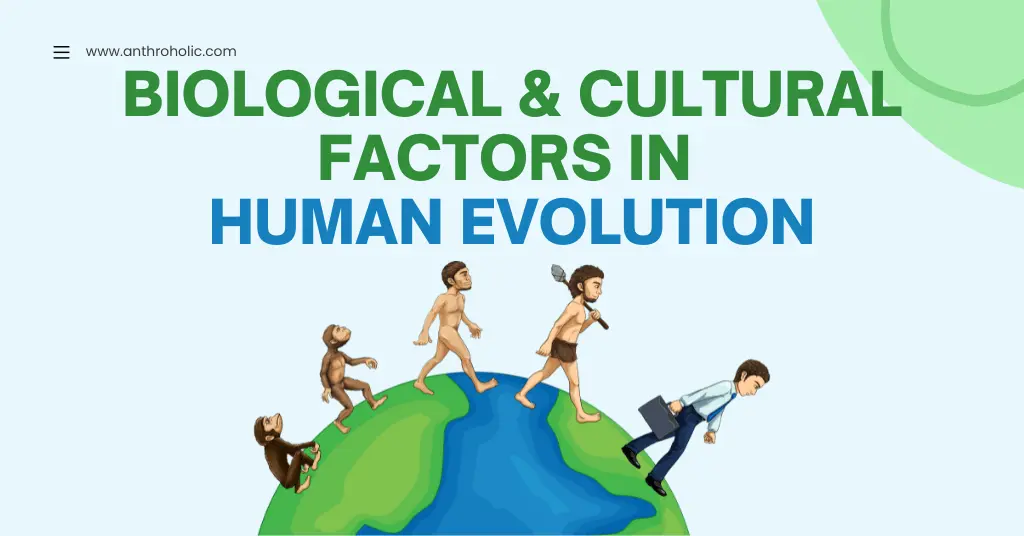
This article will explore the biological and cultural factors that have played significant roles in human evolution, as well as examine the interactions between these factors.

Biblical archaeology is a sub-discipline of archaeology that focuses on the historical and cultural aspects of the lands, peoples, and events mentioned in the Bible.
With its rich history, vision, and development, the American Anthropologcial Association has played a vital role in shaping the discipline over time.
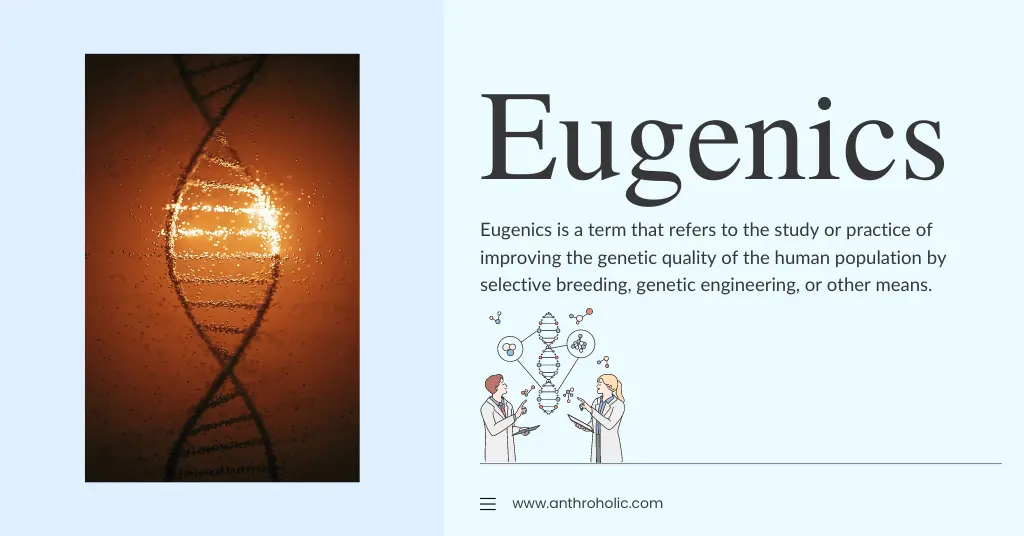
Eugenics is a term that refers to the study or practice of improving the genetic quality of the human population by selective breeding, genetic engineering, or other means.
Forensic anthropology uses anthropological methods and procedures to examine human remains with the aim of conducting legal and criminal investigations.
Biological anthropology is the academic study of human genetics, behavior, and adaptation.
The Anthropological Survey of India (AnSI) is a government-funded organization that conducts anthropological research and studies on the diverse cultures of India.
Cyborg Anthropology is an interdisciplinary field that studies the complex relationship between humans and technology, focusing on the ways in which technology has transformed the human experience.
