
AI Answer Evaluation Platform Live Now. Try Free Answer Evaluation Now

From Ancient Gambling Traditions to the Rise of Online Poker
The earliest recorded instances of gambling date back thousands of years. Therefore, the tendency to gamble is not a product of civilized society; rather, it pre-dates it. When we anticipate an outcome of chance, our brains experience a release of dopamine, which is a chemical reaction that occurred well before modern humans. Perhaps then gambling can be seen as a ritualistic extension of one of the oldest brain functions.
Astragali are the knuckle bones of sheep and goats that have 4 sides that can come to rest when thrown. They have been found in the archaeological record throughout the ancient Near East dating to at least 12,000 years ago .
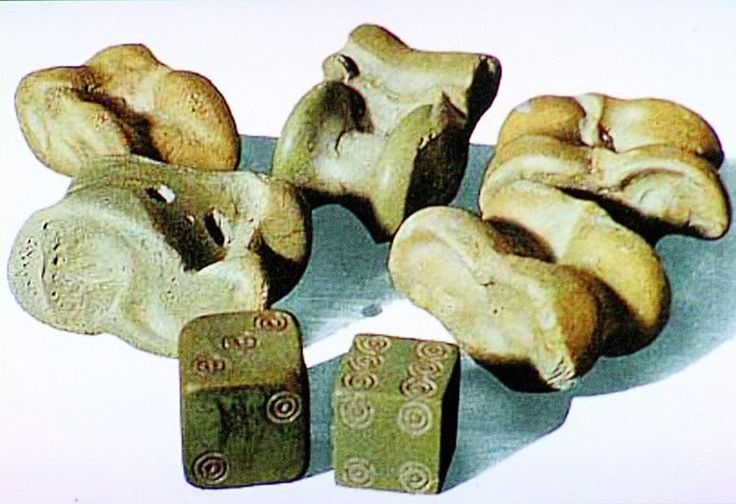
Early Civilizations and Gaming
When written records exist, there are many references to games of chance. For example, clay tablets from Mesopotamia describe dice games. Soldiers in Greece and Rome used knuckle bones for entertainment while on campaign. The Roman Emperor Augustus reportedly gambled with his guests using dice. Games of chance existed in China in some form from about 200 B.C.E. during the Han dynasty. Historians have suggested that these early games were state funded (in order to help finance construction projects) and that they contributed to the building of sections of the Great Wall. Playing cards became popular in China during the 9th century C.E. and eventually spread westward along trade routes through Central Asia, Persia and Egypt.
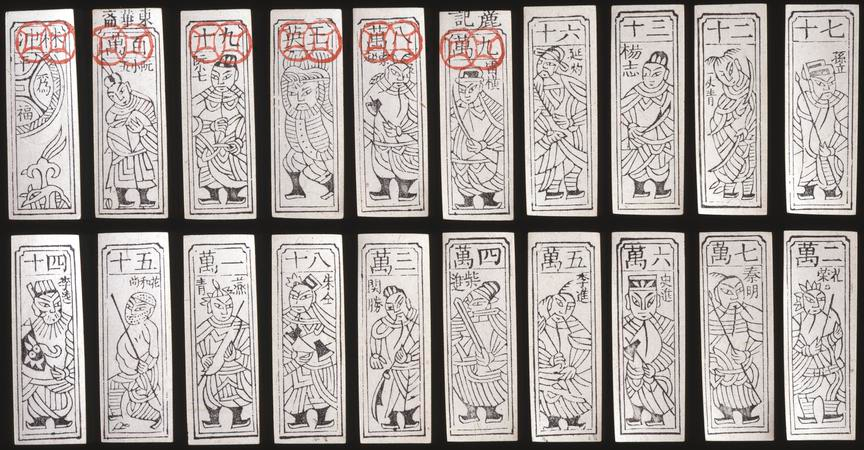
Card games came to Europe by the 14th century. Players modified the original deck to create regional variations. Examples of variations included tarot cards used in Italy, “naipe” cards in Spain and suit cards in Germany. By the 17th century, card games were a major part of European aristocracy social gatherings. Gaming houses (which would eventually develop into modern-day casinos) appeared in Venetian and other trading centers that formally organized what had previously been a casual pastime.
A Long History of Gaming in India
No other culture has documented its relationship with gambling more extensively than that of the Indian Sub-Continent. The Gambler’s Lament (a first person account of a man who lost everything due to his addiction to dice) appears in the Rig Veda, which is one of the oldest known texts in any Indo-European language. This establishes that Indians considered gambling worthy of being referenced in literature since approximately 1500 B.C.E.
A pivotal event in the Mahabharata occurs when Prince Yudhisthira engages in a series of dice games that result in him losing his kingdom, his brothers and ultimately Draupadi. This story provides insight into both how important gaming was to Indians and how morally reprehensible it could be viewed. Legal documents from ancient India (such as Manu Smriti) demonstrate attempts to regulate gaming within India, as did references to gaming in many legal codes.
Another type of card game developed during this time was Ganjifa, a circular card game that utilized beautifully painted cards. It was extremely popular in Mughal, India from the 16th century forward and spawned versions specific to regions such as Odisha, Rajasthan, and the Deccan. Ganjifa required significant memory skills and strategies to win — an early indication that Indians preferred card games that combined chance with mental acuity.
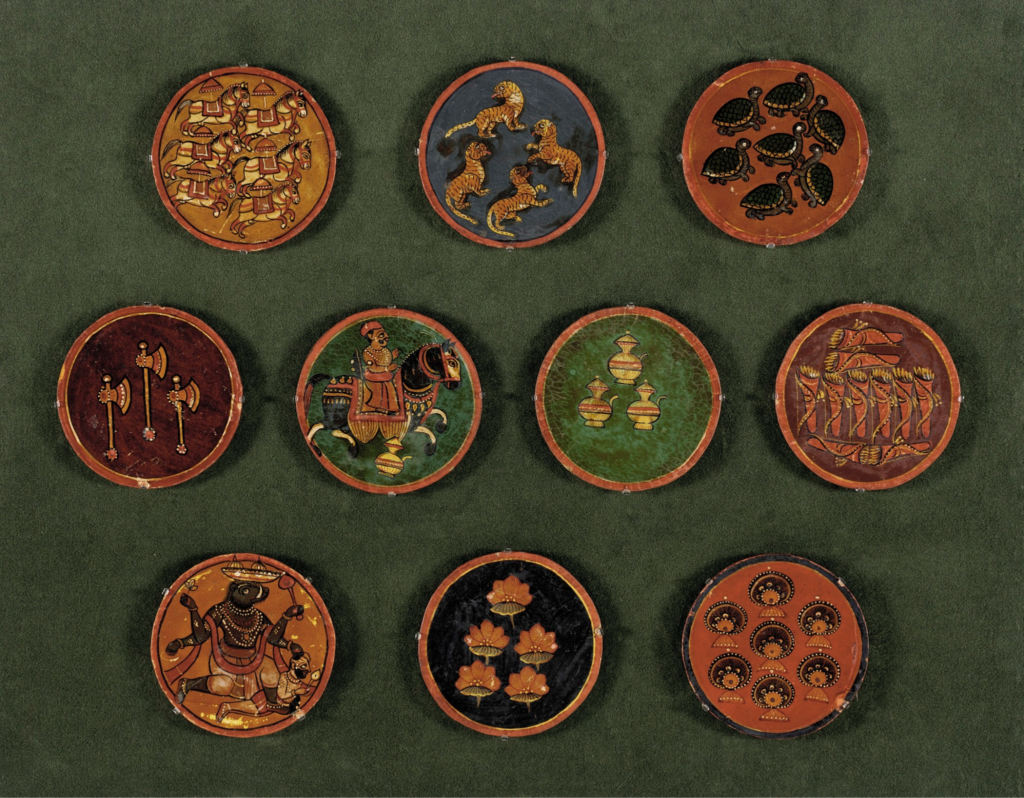
This affinity for card games requiring mental acuity continues today in India as demonstrated by reviews of platforms such as GipsyTeam covering international options like Bovada Poker.
The Rise of Modern Poker and Card Rooms
Modern poker evolved from a French game called poque in the mid-1800s when French-speaking settlers settled in New Orleans. Steamboats traveling up the Mississippi River carried the game throughout much of the U.S. and it quickly became a staple of frontier gaming culture by the 1840s. In its earliest form, modern poker used a 20-card deck but eventually adopted a standard 52-card deck and the draw mechanism in the latter half of the 19th century. In the 20th century, poker went from being a saloon game to a televised event (and eventually a competitive sport) with the creation of the World Series of Poker (WSOP). To play poker one generally needed to be physically present in a casino or cardroom.
That all changed with the emergence of the Internet. Online poker websites started popping up in the late 90’s, and within just a couple of years the “poker boom” had attracted millions of new poker players around the globe. When amateur Chris Moneymaker won the World Series in 2003 — he qualified via an online $86 satellite, he showed everyone how easy it could be to move from a home kitchen table to world champion status using nothing but a computer.
Digital Poker and Why Humans Have Always Been Drawn to It
Digital poker today is an always-on global market where players from Mumbai, Lagos, São Paulo and Stockholm can compete against each other at the exact moment they want in real-time. The technology is different. But not the underlying psychology. Whether an ancient Indian throws dice made of knuckle bones in his village or a programmer folds a bad hand on his mobile device at midnight, it is the same cognitive process: an unknown outcome, an anticipated gamble, and waiting for whatever comes next.
As anthropology continues to find out why humans continue to do things year after year and across multiple generations and continents, including gambling, it is clear that gambling provides some basic element of human naturem, specifically a way to interact with uncertainty and deal with the incompleteness of decision-making, and experience true suspense no matter how brief.

Related Posts