Anthropology

The Carboniferous Period, spanning from approximately 359.2 to 299 million years ago, is a fascinating epoch in Earth's geologic history. Derived from the Latin word 'Carbonifer', meaning 'coal-bearing,' the period was named for its extensive coal beds.

Carboniferous Period

The Carboniferous Period, spanning from approximately 359.2 to 299 million years ago, is a fascinating epoch in Earth's geologic history. Derived from the Latin word 'Carbonifer', meaning 'coal-bearing,' the period was named for its extensive coal beds.

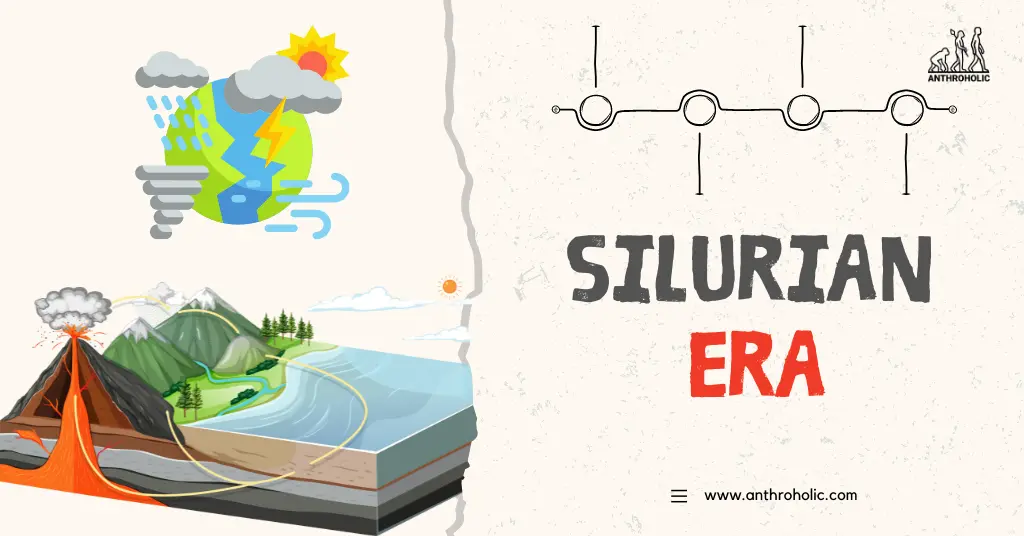
The Silurian Era, one of the six Paleozoic eras, is an important period in Earth's history. Spanning from 443.8 million to 419.2 million years ago, it saw significant changes in the planet's biodiversity, climate, and geographical features.

Silurian Era

The Silurian Era, one of the six Paleozoic eras, is an important period in Earth's history. Spanning from 443.8 million to 419.2 million years ago, it saw significant changes in the planet's biodiversity, climate, and geographical features.

The Cambrian Period, roughly 541 to 485.4 million years ago, marks a significant era in the history of life on Earth[1]. During this time, a remarkable explosion of diversity occurred, with the first appearance of many multicellular organisms and early forms of many major groups of animals alive today.

Cambrian Era

The Cambrian Period, roughly 541 to 485.4 million years ago, marks a significant era in the history of life on Earth[1]. During this time, a remarkable explosion of diversity occurred, with the first appearance of many multicellular organisms and early forms of many major groups of animals alive today.

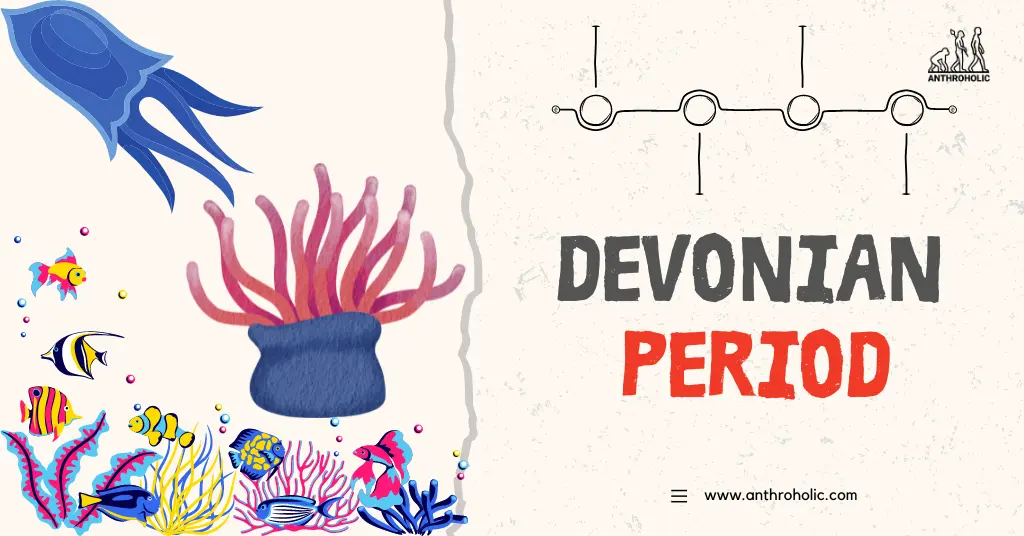
The Devonian Period, roughly spanning from 419.2 million to 358.9 million years ago, is often referred to as the "Age of Fishes". It witnessed a significant increase in the diversity of marine life forms and a shift in the continental configuration, all of which have significantly impacted life on Earth.

Devonian Period

The Devonian Period, roughly spanning from 419.2 million to 358.9 million years ago, is often referred to as the "Age of Fishes". It witnessed a significant increase in the diversity of marine life forms and a shift in the continental configuration, all of which have significantly impacted life on Earth.

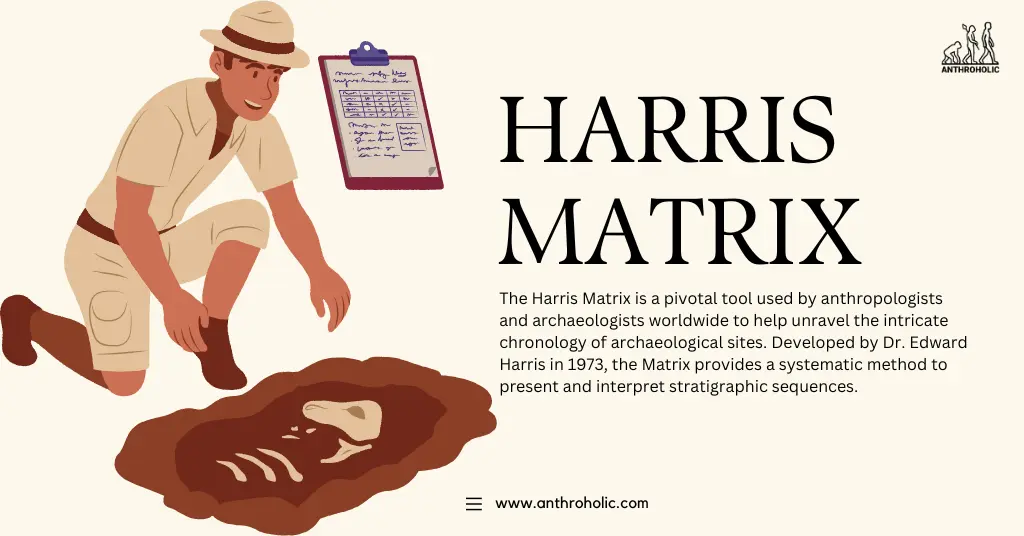
The Harris Matrix is a pivotal tool used by anthropologists and archaeologists worldwide to help unravel the intricate chronology of archaeological sites. Developed by Dr. Edward Harris in 1973, the Matrix provides a systematic method to present and interpret stratigraphic sequences.

Harris Matrix

The Harris Matrix is a pivotal tool used by anthropologists and archaeologists worldwide to help unravel the intricate chronology of archaeological sites. Developed by Dr. Edward Harris in 1973, the Matrix provides a systematic method to present and interpret stratigraphic sequences.

Linguistic analysis is the process of analyzing language by dissecting it into its various components such as phonetics, phonology, morphology, syntax, semantics, and pragmatics.

Linguistic Analysis

Linguistic analysis is the process of analyzing language by dissecting it into its various components such as phonetics, phonology, morphology, syntax, semantics, and pragmatics.

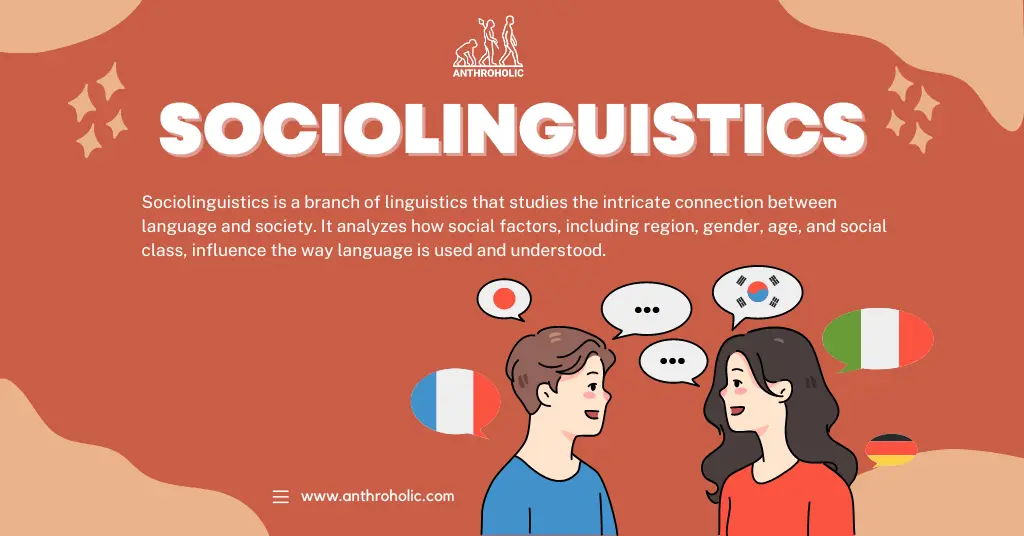
Sociolinguistics is a branch of linguistics that studies the intricate connection between language and society. It analyzes how social factors, including region, gender, age, and social class, influence the way language is used and understood.

Sociolinguistics

Sociolinguistics is a branch of linguistics that studies the intricate connection between language and society. It analyzes how social factors, including region, gender, age, and social class, influence the way language is used and understood.

The relationship between computer languages and humankind forms a recursive loop. As we shape these languages, they, in turn, shape us – our cognition, interactions, and society.

Computer Languages and Humankind

The relationship between computer languages and humankind forms a recursive loop. As we shape these languages, they, in turn, shape us – our cognition, interactions, and society.

Insights from animal communication studies are pivotal to the field of evolutionary linguistics, which seeks to understand the origins and evolution of language.

Animal Communication

Insights from animal communication studies are pivotal to the field of evolutionary linguistics, which seeks to understand the origins and evolution of language.

Ecolinguistics is an emerging field that explores the intricate relationships between language and the environment, establishing an intriguing correlation between linguistic diversity and biodiversity.

Ecolinguistics

Ecolinguistics is an emerging field that explores the intricate relationships between language and the environment, establishing an intriguing correlation between linguistic diversity and biodiversity.

The field of linguistic anthropology has long held an interest in the complex interplay between language, culture, and cognition. Anthropologists assert that language is not just a mere communicative tool, but it embodies cultural values, norms, and beliefs, and actively shapes our cognitive processes.

Language Culture and Brain Interaction

The field of linguistic anthropology has long held an interest in the complex interplay between language, culture, and cognition. Anthropologists assert that language is not just a mere communicative tool, but it embodies cultural values, norms, and beliefs, and actively shapes our cognitive processes.

The Jurassic Period, extending from about 200 million to 145 million years ago, is the middle segment of the Mesozoic Era, sandwiched between the Triassic and the Cretaceous Periods.

Jurassic Period

The Jurassic Period, extending from about 200 million to 145 million years ago, is the middle segment of the Mesozoic Era, sandwiched between the Triassic and the Cretaceous Periods.