AI Answer Evaluation Platform Live Now. Try Free Answer Evaluation Now

Tribal Marriage
Marriage among tribal societies is not a single, uniform practice but a multifaceted institution that organizes kinship, property, politics and sexual reproduction in locally meaningful ways. Studying tribal marriage reveals how social groups regulate descent, build alliances, allocate resources, and reproduce cultural knowledge.The institution of marriage, far from being a universal monolith, manifests in a dazzling array of forms across human societies.
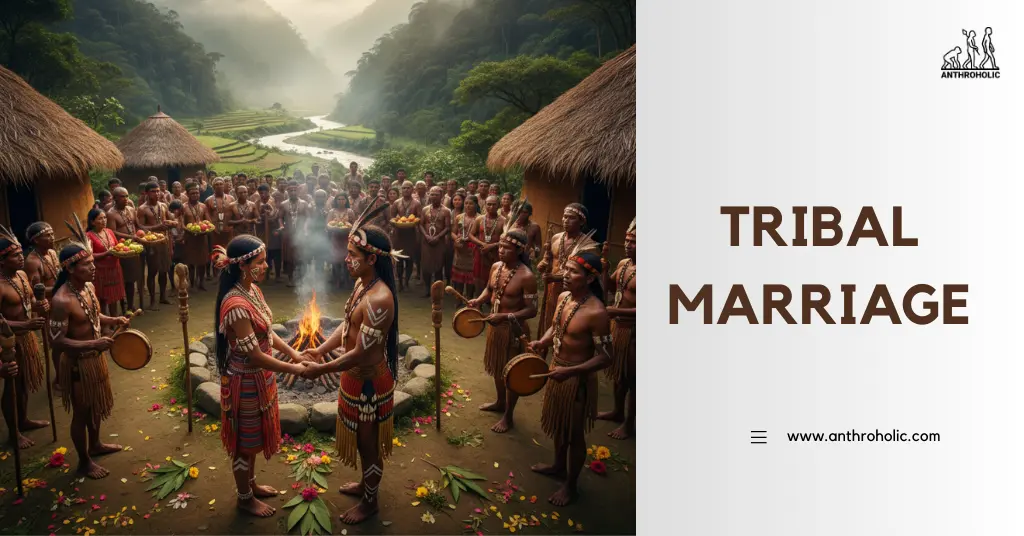
Nowhere is this diversity more pronounced and more critically important for anthropological study than in the realm of tribal marriage. These unions, embedded deeply within the unique social structures, economic systems, and cosmological worldviews of indigenous communities, represent a fundamental expression of human kinship and social continuity.
Defining Tribal Marriage
In anthropological terms, tribal societies are generally characterized by a segmentary social structure, relatively small size, reliance on tradition, and political organization that lacks centralized bureaucratic power. Tribal marriage, therefore, is the culturally sanctioned union between individuals that serves not just as a contract between two people, but fundamentally as a social alliance between two families, lineages, or clans.
The study of marriage in tribal contexts is central to the field of anthropology, particularly Social and Cultural Anthropology, for several key reasons:
- Kinship Studies: Marriage is the primary mechanism for establishing affinal (in-law) ties and is crucial for creating and maintaining the complex network of kinship the organizing principle of tribal life.
- Social Control: Marriage rules often dictate social status, inheritance, and the appropriate behavior between various kin, serving as a powerful tool for social control and stability.
- Economic Exchange: The transactions associated with marriage (bride-price, dowry, service) are vital economic activities that redistribute wealth and resources within and between communities.
“Marriage is not so much a union between two individuals as it is a formal alliance between two kinship groups, establishing a mutual system of rights, duties, and reciprocal exchanges.”
Types of Tribal Marriage
Tribal marriages are classified based on the number of spouses involved and the rules governing who may marry whom.
1. Monogamy and Plural Marriages
While monogamy (one husband, one wife) is present in many tribal groups, plural marriages are culturally sanctioned and often prestigious in others.
- Polygyny: One husband marries multiple wives simultaneously.Historically common among many pastoral groups in Africa (the Maasai) where it signaled wealth and labor availability.
- Polyandry: One wife marries multiple husbands simultaneously.Found in regions with scarce resources (Himalayan communities like the Toda of Nilgiri Hills, India). Fraternal Polyandry (husbands are brothers) is the most common form.
2. Prescriptive and Proscriptive Rules
Tribal societies enforce strict rules regarding marriage partners to maintain social order and property lines.
- Endogamy: The rule prescribing marriage within a specific social unit (e.g., within one’s own tribe, caste, or religious group). This maintains the group’s identity and cohesiveness.
- Exogamy: The rule prescribing marriage outside a specific social unit .This promotes alliances between groups and prevents incest. The rule of incest taboo a universal proscription against sexual relations or marriage between certain close relatives is a prime example of exogamy.
Mechanisms of Spouse Acquisition
The process by which a partner is acquired is often elaborate, involving various forms of ritual, negotiation, and economic transaction. These mechanisms are classified based on the level of consent, negotiation, and exchange involved.
A. Marriage by Negotiation (The Norm)
This is the most widespread form, involving a formal agreement between the families, often orchestrated by kin-based intermediaries.
- Bride-Price (or Bride-Wealth): The transfer of wealth (cattle, money, goods) from the groom’s family to the bride’s family.
- Significance: It legitimizes the marriage and the children born from it, compensates the bride’s family for the loss of her labor and reproductive potential, and signifies the groom’s commitment.
- Case Study: Among the Nuer of South Sudan, a significant transfer of cattle (bride-wealth) is mandatory to cement the alliance and legitimize the offspring, who belong to the husband’s lineage.
- Dowry: The transfer of wealth from the bride’s family to the groom or the groom’s family. While less common in traditional tribal societies than bride-price, it often occurs where the woman’s family wishes to ensure her economic security or where the practice has been influenced by surrounding non-tribal societies.
- Bride-Service: The groom works for the bride’s family for a specified period before or after the marriage.
- Example: Historically practiced by groups like the Kukis of Northeast India and among some hunter-gatherer societies where the wealth is not easily accumulated (like the !Kung San).
B. Marriage by Capture (Less Common Today)
This is the forceful taking of a woman from another group, often performed ritually or symbolically. While real capture has largely vanished or become a symbolic ritual, it historically served to acquire partners from outside one’s group in times of hostility.
C. Marriage by Trial (Testing the Groom)
A practice where the prospective groom must prove his courage, strength, or skill to win the bride.
- Example: The Bhil tribe in India historically had a tradition involving an ordeal of capturing the hand of a chosen woman in the midst of a festive crowd.
D. Marriage by Exchange
A direct exchange of women between two groups or families, eliminating the need for bride-price or dowry.
Case studies (India)
Nagaland: bridewealth (Ame) and ceremonial complexity
Among many Naga tribes, marriage involves elaborate bridewealth payments locally patterned bundles of goods, livestock, and ceremonial obligations often called ame. Anthropological studies of Sumi, Lotha and Zeliang Nagas document how ame functions as both economic compensation and a continuing tie between kin groups; conversion to Christianity and modern cash has changed forms but not the social logic of compensation and alliance.
Gonds: cross-cousin marriage and social regulation
Gond communities have a long-documented preference for cross-cousin marriage (marrying the daughter of a father’s sister or mother’s brother). Such prescriptive rules manage alliance networks and inheritance lines; ethnographic sources report fines or social pressure when young people refuse an available cross-cousin match.
Khasi (Meghalaya): matriliny, matrilocal residence, and the Ka Khadduh
The Khasi are one of Indian society’s best-known matrilineal groups: descent and property pass through women and post-marital residence tends to be matrilocal (husband moves in). The youngest daughter (Ka Khadduh) plays a central role in inheritance and care of parents; marriages therefore link men into the matrilineal household rather than produce patrilineal households. Contemporary debates about legal recognition and social change make Khasi marriage particularly instructive for questions about gender, law, and customary authority.
The Social and Economic Functions
The function of marriage in tribal life extends far beyond personal companionship. It is a critical institution performing essential societal roles.
1. The Procreation and Upbringing of Children
In nearly all societies, marriage provides a culturally approved framework for legitimizing offspring, thereby determining the child’s lineage, inheritance rights, and place in the social order. This is particularly vital in patrilineal and matrilineal tribal systems.
2. Labor Division and Economic Cooperation
Marriage establishes a durable partnership that ensures the efficient division of labor based on gender a universal necessity for survival in most tribal economies. For instance, in agricultural tribes, the union ensures shared labor for farming, while in hunter-gatherer groups, it combines the efforts of the hunter and the gatherer.
3. Alliances and Political Stability
As noted by anthropologist A.R. Radcliffe-Brown in his work African Systems of Kinship and Marriage, the alliance function is paramount. Marriage links descent groups (lineages, clans) into a larger political and economic network, reducing conflict and ensuring mutual support.
“The essential function of marriage is the perpetuation of the social structure by providing a mechanism for the incorporation of legitimate new members into the kinship system.”
- A. R. Radcliffe-Brown
Conclusion
Tribal marriage is a rich and complex subject, illuminating the diverse paths human societies take to organize themselves, manage resources, and ensure continuity. From the elaborate cattle exchanges of the Nuer to the unique practice of polyandry in the Himalayas, these customs are not relics of the past but living institutions that reflect deep-seated cultural values concerning lineage, wealth, and alliance.
As tribal societies increasingly encounter modernization and globalization, the study of their marriage patterns remains a vital task for anthropologists, offering profound insights into the foundational structures of human social life.
Frequently Asked Questions (FAQs)
What is the difference between Bride-Price and Dowry?
Bride-Price is the transfer of goods or wealth from the groom’s family to the bride’s family, primarily to legitimize the marriage and the children. Dowry is the transfer of wealth from the bride’s family to the groom or his family, often intended to ensure the bride’s economic security or as a pre-mortem inheritance.
Is the Incest Taboo universal across all tribal societies?
Yes, the incest taboo the prohibition against sexual relations or marriage with certain close relatives—is considered a cultural universal, though the specific range of relatives included in the taboo varies from culture to culture (e.g., some include first cousins, others do not). The universality of this rule is a major focus of anthropological inquiry.
Why do some tribal groups practice Polyandry?
Polyandry (one wife, multiple husbands) is a relatively rare form, often found in challenging environments. It is theorized to function as a resource management strategy: Fraternal Polyandry, where the husbands are brothers, prevents the division of scarce family land among multiple heirs, keeping the ancestral estate intact and providing a higher standard of living for the entire family unit.
How do modern laws impact traditional tribal marriage practices?
The laws of modern nation-states (e.g., concerning minimum marriage age, monogamy, or registration) often clash with customary tribal practices, particularly plural marriages and child marriage. This conflict creates legal and social challenges, forcing communities to adapt and sometimes leading to a dual system where traditional customs persist alongside state laws.
References
- Jimo, L. (2008). Marriage Prestations and “Ame” (Bridewealth) in the Sumi Naga of Nagaland. Journal (JSTOR). Retrieved from https://www.jstor.org/stable/41920073. JSTOR
- Lalengkimi, A. (2024). The Status of Women and Bride-Price among the Zeme Nagas of Nagaland. Journal of Novel Research and Innovative Development, 2(8). Retrieved from https://tijer.org/jnrid/papers/JNRID2408001.pdf. Tijer
- Shohe, L. (2021). Change and Continuity of Marriage Rituals among Naga Tribes. Gujarat University E-Journal. Retrieved from https://hrdc.gujaratuniversity.ac.in/Uploads/EJournalDetail/30/1047/1.pdf. hrdc.gujaratuniversity.ac.in
- Yuhlung, C. C. (2007). Matrilateral Cross-Cousin Marriage among the Chothe. Journal Article (JSTOR). Retrieved from https://www.jstor.org/stable/23620704. JSTOR
- “Khasi Matriliny: A Historical Approach” (2024). Journal of South Asian Research. Retrieved from https://www.arfjournals.com/image/catalog/Journals%20Papers/JSAR/2024/No%202%20%282024%29/9-Sweetty%20Queen-JSAR.pdf. arfjournals.com
- The Elementary Structures of Kinship — Lévi-Strauss, C. (1949/1969). Beacon Press (English translation). (Text consulted via Internet Archive). Retrieved from https://archive.org/details/TheElementaryStructuresOfKinshipLeviStrauss. Internet Archive
- Dalzero, A., et al. (2024). Cross-cousin marriage among Tsimane forager-farmers. Proceedings of the National Academy of Sciences (PNAS). Retrieved from https://pmc.ncbi.nlm.nih.gov/articles/PMC10988167/. PMC
- Inflibnet E-book (Kinship, family and marriage among Indian tribes). (n.d.). Anthropology Teaching Module. Retrieved from https://ebooks.inflibnet.ac.in/antp05/chapter/kinship-familyand-marriage-among-the-indian-tribes/

Related Posts