AI Answer Evaluation Platform Live Now. Try Free Answer Evaluation Now

Fingerprint Bureau
Fingerprint bureau national, regional and international agencies that collect, store and compare friction-ridge impressions sit at the intersection of science, statecraft and social life. From their colonial origins to modern automated systems (AFIS/NGI/NAFIS), fingerprint bureaus have shaped practices of identification, criminality, citizenship and surveillance. Fingerprint bureaus, the institutional homes of dactyloscopy, stand as a critical intersection of human biology, historical identification practices, and modern state surveillance.
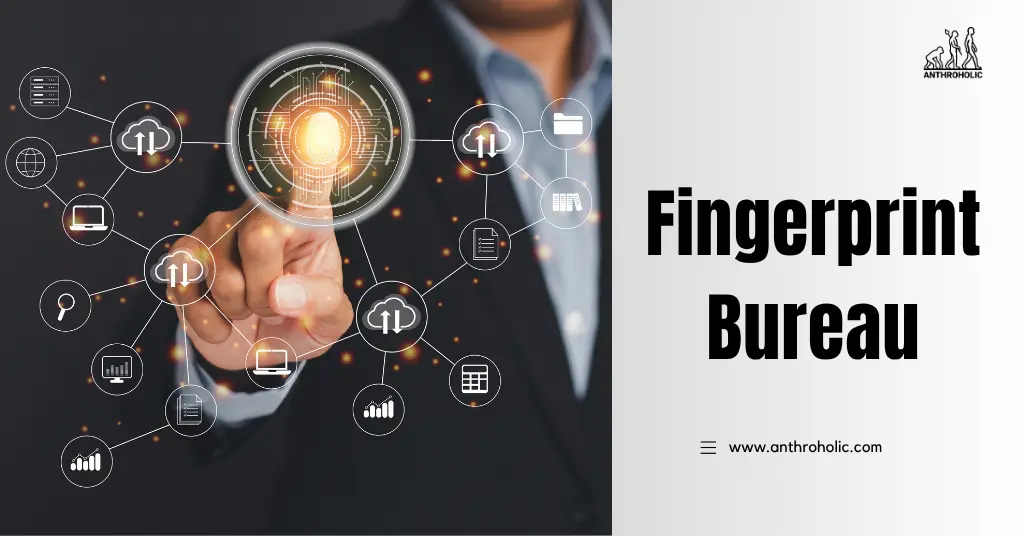
From an anthropological viewpoint, these institutions are more than just repositories of evidence; they represent the culmination of a global human quest for absolute, biological self-identification. They are monuments to a radical shift in how societies define and manage individual identity, transitioning from mutable social markers like names or clothing to an ostensibly immutable biological trait: the friction ridge skin.
The Index of the Self: An Anthropological Perspective on Fingerprint Bureaus
Fingerprint bureaus, the institutional homes of dactyloscopy, stand as a critical intersection of human biology, historical identification practices, and modern state surveillance. From an anthropological viewpoint, these institutions are more than just repositories of evidence; they represent the culmination of a global human quest for absolute, biological self-identification. They are monuments to a radical shift in how societies define and manage individual identity, transitioning from mutable social markers like names or clothing to an ostensibly immutable biological trait: the friction ridge skin.
I. Dactyloscopy as a Cultural Technology
The concept that the pattern on a human fingertip is a unique and permanent identifier is a profound cultural achievement, not merely a scientific one. Long before the formal establishment of police bureaus, cultures across the globe recognized the significance of dermal ridges.
Ancient Roots of Identity
The use of fingerprints as a form of non-literate signature spans millennia and geography.
- Ancient China: As early as the Qin Dynasty (221–206 B.C.), hand and finger traces were used in crime scene investigation and on clay seals for contracts, demonstrating an early practical understanding of their distinction. Following the invention of paper, it became common practice to secure legal documents and criminal confessions with a thumbprint.
- Babylon and India: Clay tablets in ancient Babylon bore fingerprints, and in 17th-century India, the nobility sometimes used friction ridge skin as signatures on documents, reinforcing identity through direct bodily impression.
This historical use highlights a key anthropological theme: the fingerprint began as a symbol of authentication and authority, a direct and unforgeable bodily marker in cultures where literacy was rare. It provided a universal means of individual recognition, bypassing language and social rank.
The Western Transition: From Measurement to Pattern
The 19th century in the West marked the shift from casual use to formalized scientific systems, driven by the need to manage increasingly mobile urban populations and curb repeat offenders.
| Era | Primary Identification System | Anthropological Focus | Cultural Significance |
| Late 19th Century | Anthropometry (Bertillonage) | Physical measurement of skeletal traits (e.g., skull length, arm span). | The body as a quantifiable, stable machine. Focused on classifying groups. |
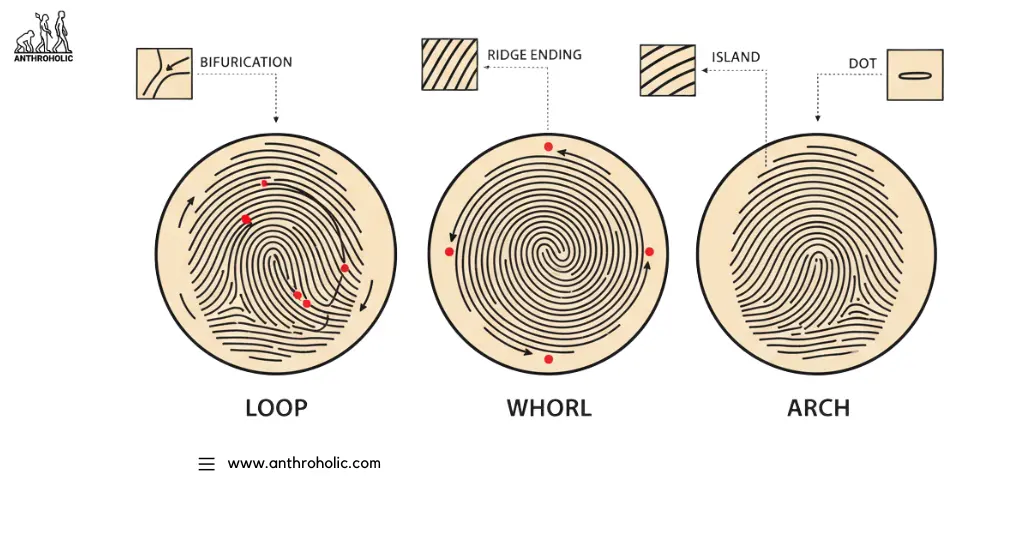
| Turn of 20th Century | Dactyloscopy (Henry/Galton System) | Patterns of friction ridge skin (loops, whorls, arches) and minutiae. | The skin as a unique, permanent biological signature. Focused on identifying the individual. |
The rivalry between Alphonse Bertillon’s anthropometry and the developing fingerprint system is an anthropological study in itself. Bertillonage sought to classify individuals by a battery of body measurements, treating the subject as a data-set of averages. Francis Galton, a British anthropologist, and Sir Edward Henry ultimately supplanted this system by demonstrating the superior permanence and uniqueness of the fingerprint pattern, leading to the creation of the Henry Classification System—the fundamental organizing principle for the early Fingerprint Bureaus.
II. The Institutionalization of Identity: The Bureau
The establishment of the Fingerprint Bureau was an act of state-sponsored identification, a powerful mechanism for sorting, tracking, and controlling populations, particularly those deemed criminal or requiring documentation.
The Bureau as a Repository of the Self
The bureau’s primary function was to take a set of ten-prints (often called a “ten-card”) and categorize them within a vast, indexed system. This process codified the friction ridge pattern into a social artifact—a numerical or alphanumeric classification that could be cross-referenced, establishing a persistent official identity for the individual.
The core principles that underpin the bureau’s authority are anthropological maxims about the body:
- Permanence: The friction ridges are formed in the womb and remain unchanged until decomposition.
- Individuality: No two prints are exactly alike.
- Infallibility: The system of identification based on these principles is largely reliable.
This “infallibility” principle gave the bureaus immense institutional power, making the fingerprint the gold standard of forensic evidence for nearly a century.
The Digital Revolution: Automated Biometric Systems
The massive scale and labor intensity of manual classification eventually gave way to the Automated Fingerprint Identification System (AFIS), marking the most significant technological leap in bureau history.
AFIS, and its modern evolution into the Automated Biometric Identification System (ABIS), digitized the human hand, converting the analog curves of the ridge pattern into a set of mathematically precise minutiae points (ridge endings and bifurcations).
Impact of Automation:
- Scale and Scope: AFIS allowed bureaus to compare a latent print from a crime scene against millions of ten-print records in minutes, fundamentally changing police investigation workflow and increasing the scope of identification to entire national databases.
- Mission Creep: The technology has moved beyond criminal justice into large-scale identity management, including national ID programs, border control, and victim identification in mass disasters. This shift highlights a modern anthropological concern: the move from biometrics for forensic identification to biometrics for ubiquitous identity verification.
III. The New Anthropology of Error and Bias
Recent decades, fueled by critical forensic science assessments and a renewed anthropological lens, have challenged the myth of the fingerprint bureau’s perfect infallibility, forcing a reckoning with human factors and cognitive bias.
Cognitive Bias and Subjectivity
While the physical print is a biological fact, the analysis, comparison, evaluation, and verification (ACE-V) process is a human endeavor. Recent research has shown that contextual information about a case (e.g., knowing the suspect failed a polygraph) can unconsciously influence an examiner’s interpretation of an ambiguous latent print, leading to a phenomenon known as confirmation bias.
- Anthropology of Expertise: Studies reveal that the “sufficiency threshold”—the amount of detail an examiner deems necessary to make an identification—can vary between practitioners, even among those with similar experience. This variability suggests that the expert’s judgment is a culturally learned and personally applied standard, rather than a purely objective scientific calculation.
Systemic Bias in Biometrics
The digital foundation of AFIS/ABIS also introduces a new layer of potential bias rooted in technology itself.
- Training Data Bias: If the algorithms that power AFIS/ABIS are trained predominantly on fingerprint data from a non-diverse population, the system may show a higher rate of “failure to enroll” or “false rejection” when processing data from underrepresented demographic groups. This creates an issue of digital disenfranchisement, where technological standards inadvertently exclude or misidentify certain populations.
- The Problem of the Score: The computerized system produces a candidate list with a confidence score, and research indicates that the examiner’s decision can be influenced by the rank and score on this list. This transfers an element of algorithmic faith into a supposedly human-verified conclusion, blurring the line between automated suggestion and professional judgment.
IV. Ethical Frontiers and the Future of the Bureau
The modern Fingerprint Bureau, now part of a broader ABIS framework, faces profound ethical and legal challenges that require careful anthropological consideration of the relationship between the individual body and the data state.
Biometric Data and Human Rights
The increasing integration of fingerprints with other biometric identifiers (facial recognition, iris scans) has led to the creation of pervasive digital identities. This raises critical questions about data sovereignty and the universal right to privacy.
The fingerprint, which was once a record of a single crime, is now a key that unlocks a person’s entire digital existence.
- Transparency and Consent: Anthropologists emphasize the need for transparency in how biometric data is collected, processed, and shared across agencies. When a biometric characteristic is a mandatory requirement for accessing essential services (e.g., state ID, border entry), the concept of informed consent is severely strained.
- The Body as Public Record: The move to permanent, multi-modal biometric systems positions the body itself—the skin, the face, the iris—as a public resource to be indexed and monitored by the state. This represents a fundamental shift in the social contract, replacing the right to anonymity in public with a state-enforced, biologically-tied identity.
Conclusion: The Enduring Index of Identity
The Fingerprint Bureau has evolved from a room full of inked cards and magnifying glasses into a sophisticated, interconnected digital engine. Anthropologically, the history of the bureau is the history of the forensic gaze—the systematic way in which state power has sought to stabilize and control the fluid nature of human identity by anchoring it to a biological constant.
Contemporary challenges related to cognitive bias, algorithmic fairness, and biometric data privacy underscore that the greatest ongoing work of the bureau is not in the collection of prints, but in the ethical governance of the power derived from having created the ultimate, immutable index of the self. The future requires a commitment to scientific rigor that acknowledges human fallibility and the profound societal implications of using the human body as a universal password.
References
- National Institute of Justice — The Fingerprint Sourcebook (PDF)
https://www.ojp.gov/pdffiles1/nij/225320.pdf - National Institute of Justice — Fingerprint Sourcebook (landing page)
https://nij.ojp.gov/library/publications/fingerprint-sourcebook - Federal Bureau of Investigation — Next Generation Identification (NGI) (biometrics)
https://le.fbi.gov/science-and-lab/biometrics-and-fingerprints/biometrics/next-generation-identification-ngi - FBI — PIA: Next Generation Identification (NGI) — Biometric Interoperability (PDF)
https://www.fbi.gov/file-repository/pias/pia-next-generation-identification-biometric-interoperability.pdf/view - INTERPOL — Fingerprints (AFIS / Biometric Hub)
https://www.interpol.int/How-we-work/Forensics/Fingerprints - INTERPOL — Guidelines concerning Fingerprint Transmission (PDF)
https://www.interpol.int/content/download/7189/file/Guidelines_FingerprintsTransmission_EN.pdf - The Sedona Conference — U.S. Biometric Systems Privacy Primer (May 2024) (PDF)
https://www.thesedonaconference.org/sites/default/files/publications/Biometric-Systems-Privacy-Primer-May-2024.pdf - Press Information Bureau, Government of India — National Automated Fingerprint Identification System (NAFIS) (Press release, 4 Dec 2024)
https://www.pib.gov.in/PressReleasePage.aspx?PRID=2080660 - Ministry of Home Affairs / Parliamentary reply PDF (NAFIS statistics & implementation)
https://www.mha.gov.in/MHA1/Par2017/pdfs/par2024-pdfs/RS04122024/1043.pdf - Oxford Research Encyclopedias — “History of Anthropometry and Fingerprinting in Colonial South Asia” (Oxford University Press)
https://oxfordre.com/asianhistory/display/10.1093/acrefore/9780190277727.001.0001/acrefore-9780190277727-e-834

Related Posts