AI Answer Evaluation Platform Live Now. Try Free Answer Evaluation Now
The Mirror of Our Ancestors: What Bones and Artifacts Tell Us About Our Future
Archaeology often seems like a journey into the past, but it’s really a guide to what lies ahead. Studying skeletal remains and ancient tools, researchers reveal how past generations dealt with crises.
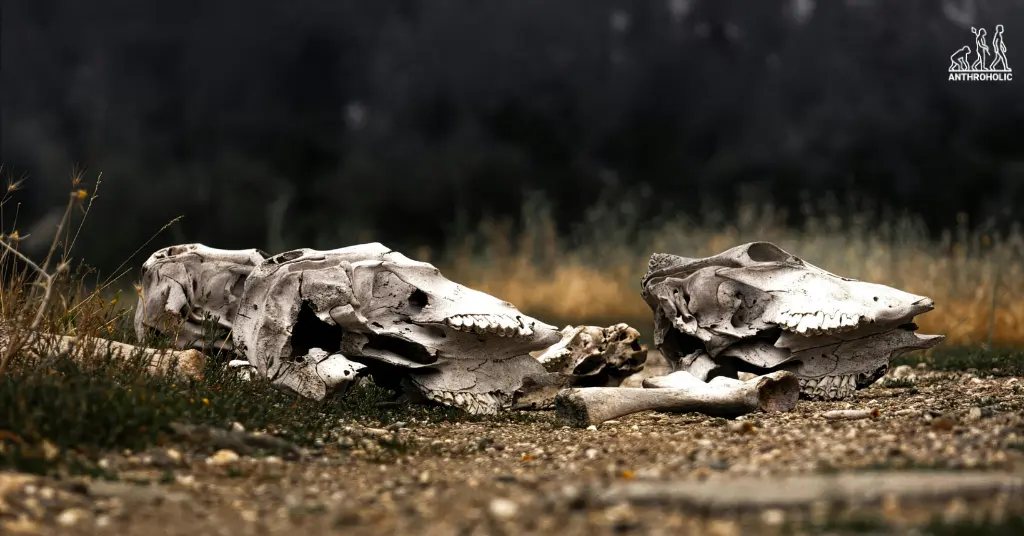
These enduring physical records show biological strengths and environmental failures that persist to the present day. Understanding these patterns helps us anticipate modern challenges. According to the original article source, we can learn to adapt our biology and technology by studying the successes and mistakes of those who walked before us. These archetypes offer us the foresight to outlive any future changes.
Genetic Health Predictions
Bones are biological hard drives, encoded with data about how diseases have evolved over millennia. In New Zealand, geneticists working with ancestral remains have pinpointed specific markers and revealed a long history of metabolic adaptation. The origins of modern health predispositions can be traced through the teeth and bone density, long before angering gods over pudding pie on a tropical island.
This genetic material from so long ago establishes a baseline to understand how we react to changes in diet and sedentary living. It enables doctors to formulate hypotheses about which populations may have greater susceptibility to specific conditions before their onset.
Modern Medical Applications
Deconstructing these ancient sequences is what modern laboratories are using to develop targeted therapies. We’re witnessing an evolution where history drives future pharmacy. For instance, knowing how ancient populations coped with certain pathogens informs our response to future viral outbreaks.
If they map this resistance onto older skeletal samples, we will gain insight into natural immunity. This is not only a historical piece but rather about leveraging the past to design better vaccines and personalized medicine. The intention is to trace these adaptive features, which can enhance the long-term health outcomes of all people.
Ancient Survival Strategies
Social structures and governance of resources seen in early societies contributed to their survival. In the context of New Zealand’s history, the process by which early Māori established seasonal settlements is a master class in sustainability.
They had particular methods of storage for kūmara and managed their fisheries to prevent overfishing. They display an advanced understanding of carrying capacity in a highly sophisticated system of social survival:
- Rāhui (Resource Protection): Banning certain fishing grounds or forest areas to let ecosystems recover.
- Kaitiakitanga (Wardens): This cultural perspective of nature amply rewarded the fauna and flora everywhere as ancestral treasures rather than commodities.
- Whanaungatanga (Community Bonds): Weaving everyone’s worry and too much work moved beyond their reach by a concrete sense of group unity in bad times.
Examining these ancient systems, we find a blueprint for contemporary disaster preparedness. Collective resource sharing worked better than individual hoarding under conditions of environmental stress or scarcity.
Resource Innovation
The tools that remain tell a story of chilling efficiency. As raw materials were in short supply, our ancestors devised ingenious ways to recycle stone and bone. We observe this in smooth adzes performed for woodworking and seafaring. These were built to last, and they got repaired, not discarded.
This philosophy of durability is precisely what our waste crisis dictates modern manufacturing should follow. These survival techniques remind us that you don’t need high technology to innovate, only a deep connection with whatever materials are available.
Archaeology as Strategy: Lessons from Ancestral Resilience
It happens that sediment layers and organic remnants collected with ancient artifacts in excavation sites aren’t only relics of past eras; they are a hard-and-fast game plan for managing current climate instability. The geological history of New Zealand, for example, demonstrates that coastal communities were active agents in environmental change-not mere victims.
And instead of retreating, they dynamically relocated their core country as oceans rose and volcanoes erupted. We can adopt a carefully executed and incremental path, in part based on these ancient success stories as they moved and settled:
- Map Historical Climate Memory. We should study the habitation choices of ancient groups and their abandonment before we break ground on new developments. Observing which landscapes held their own for thousands of years and which faltered again and again defines the best geographical characteristics that can make up resilient modern sites.
- Prioritize Adaptive Infrastructure. Ancient sites serve as case studies for nature-based protection. Planning for the future should reflect attributes of our ancestors and use landforms that serve as a buffer against natural hazards, rather than depend upon rigid human-made walls.
- Implement Regenerative Land Management. Think beyond the burnout-farmed methods of industrial agriculture. By reinforcing the “controlled burn” and selective harvesting of early settlers, we can find an intersection with local flora and fauna where that land is productive for centuries, not just seasons.
- Synthesize Tradition with Modern Science. The final transition is from these archaic ecological practices to ones that incorporate modern technological monitoring. This creates a food system that fosters biodiversity instead of wiping it out.
These remnants prove that human culture is fully capable of cohabitation upon and within land without decimating the very ecosystems needed for our existence. That level of long-term thinking is not merely geographic curiosity; it’s a must for our current environmental policies.

Related Posts