Linguistic Anthropology

Linguistic Anthropology is the study of language in social and cultural contexts. This category explores how language shapes and is shaped by society, how it reflects cultural values and beliefs, and how it influences our thoughts, actions, and experiences. Discover the rich diversity of languages, their evolution, and the impact they have on human interaction.

Ecolinguistics is an emerging field that explores the intricate relationships between language and the environment, establishing an intriguing correlation between linguistic diversity and biodiversity.
Ecolinguistics

Ecolinguistics is an emerging field that explores the intricate relationships between language and the environment, establishing an intriguing correlation between linguistic diversity and biodiversity.
The field of linguistic anthropology has long held an interest in the complex interplay between language, culture, and cognition. Anthropologists assert that language is not just a mere communicative tool, but it embodies cultural values, norms, and beliefs, and actively shapes our cognitive processes.

Language Culture and Brain Interaction

The field of linguistic anthropology has long held an interest in the complex interplay between language, culture, and cognition. Anthropologists assert that language is not just a mere communicative tool, but it embodies cultural values, norms, and beliefs, and actively shapes our cognitive processes.

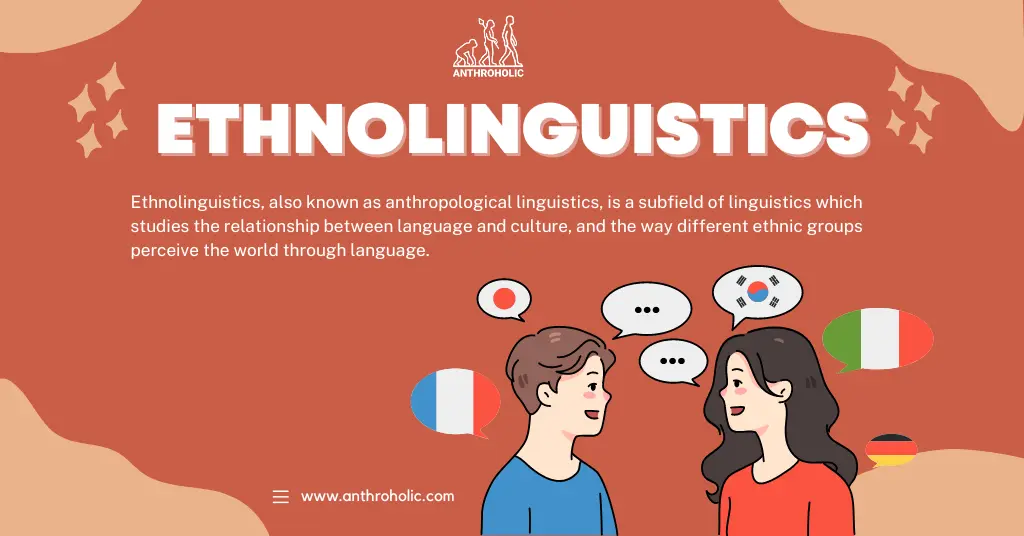
Ethnolinguistics, also known as anthropological linguistics, is a subfield of linguistics which studies the relationship between language and culture, and the way different ethnic groups perceive the world through language.

Ethnolinguistics

Ethnolinguistics, also known as anthropological linguistics, is a subfield of linguistics which studies the relationship between language and culture, and the way different ethnic groups perceive the world through language.

In the realm of linguistic anthropology, language and thought are seen as deeply intertwined. Language not only serves as a vehicle for thought, but it also shapes the way we perceive and interact with our world. The implications of this connection between language and thought are far-reaching, touching upon aspects of our culture, cognition, and even future technologies.

Language and Thought

In the realm of linguistic anthropology, language and thought are seen as deeply intertwined. Language not only serves as a vehicle for thought, but it also shapes the way we perceive and interact with our world. The implications of this connection between language and thought are far-reaching, touching upon aspects of our culture, cognition, and even future technologies.

Linguists define syntax in a language as the set of rules governing sentence construction in a language. These rules govern the order and relationships among words, phrases, and clauses.

Syntax in a Language

Linguists define syntax in a language as the set of rules governing sentence construction in a language. These rules govern the order and relationships among words, phrases, and clauses.

Kinesics, coined by anthropologist Ray Birdwhistell, represents the study of human movement as a method of communication. Kinesics takes into account every form of body movement – from facial expressions to posture and gesticulation, considering them as parts of a complex language system.

Kinesics

Kinesics, coined by anthropologist Ray Birdwhistell, represents the study of human movement as a method of communication. Kinesics takes into account every form of body movement – from facial expressions to posture and gesticulation, considering them as parts of a complex language system.

The different aspects of language structure—phonology, morphology, syntax, semantics, pragmatics, and sociolinguistics—interact dynamically to facilitate human communication.

Language Structure

The different aspects of language structure—phonology, morphology, syntax, semantics, pragmatics, and sociolinguistics—interact dynamically to facilitate human communication.

Verbal communication, a cornerstone of human interaction, has played an essential role in the evolution of societies and cultures worldwide. As an area of focus in anthropological research, verbal communication sheds light on various facets of human behavior and society, encompassing linguistics, culture, cognition, and human development.

Verbal Communication

Verbal communication, a cornerstone of human interaction, has played an essential role in the evolution of societies and cultures worldwide. As an area of focus in anthropological research, verbal communication sheds

Comparative Philology is a critical branch of linguistic anthropology that investigates how languages change and evolve over time. Originating in the 19th century, it systematically studies the relationships and similarities between languages, providing us with key insights into human culture, migration, and evolution.

Comparative Philology

Comparative Philology is a critical branch of linguistic anthropology that investigates how languages change and evolve over time. Originating in the 19th century, it systematically studies the relationships and similarities between languages, providing us with key insights into human culture, migration, and evolution.

Morphology, a crucial branch of linguistic anthropology, is the study of words' internal structure and the ways they can be modified. This discipline allows us to understand how meaning is constructed within a language, providing a rich understanding of cultural patterns and social structure.

Morphology

Morphology, a crucial branch of linguistic anthropology, is the study of words' internal structure and the ways they can be modified. This discipline allows us to understand how meaning is constructed within a language, providing a rich understanding of cultural patterns and social structure.

Multilingualism is the ability to communicate in more than one language, whether fluently or to some extent. It is a common phenomenon around the world, with over half of the global population being bilingual or multilingual.

Multilingualism

Multilingualism is the ability to communicate in more than one language, whether fluently or to some extent. It is a common phenomenon around the world, with over half of the global population being bilingual or multilingual.

Ethnopoetics, as a literary and anthropological term, refers to the study and interpretation of non-western oral literatures or "ethnographic texts", including indigenous or tribal poetries and stories.

Ethnopoetics

Ethnopoetics, as a literary and anthropological term, refers to the study and interpretation of non-western oral literatures or "ethnographic texts", including indigenous or tribal poetries and stories.