AI Answer Evaluation Platform Live Now. Try Free Answer Evaluation Now

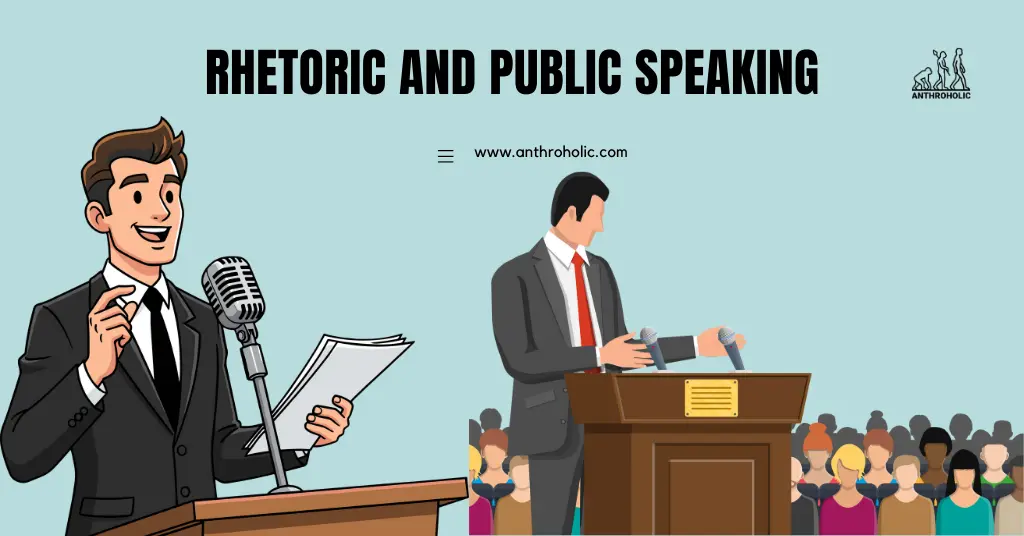
Rhetoric and Public Speaking

From the high-stakes debates of the ancient Greek agora to the carefully curated viral clips of 21st-century digital activists, the ability to
+91-7303290503, +91-9557169661 | MON to SUN 10:00 AM - 6:00 PM
Linguistic Anthropology is the study of language in social and cultural contexts. This category explores how language shapes and is shaped by society, how it reflects cultural values and beliefs, and how it influences our thoughts, actions, and experiences. Discover the rich diversity of languages, their evolution, and the impact they have on human interaction.
From the high-stakes debates of the ancient Greek agora to the carefully curated viral clips of 21st-century digital activists, the ability to

In the vast landscape of anthropological study, few elements of human interaction are as potent yet as frequently misunderstood as the gaze. Oculesics,
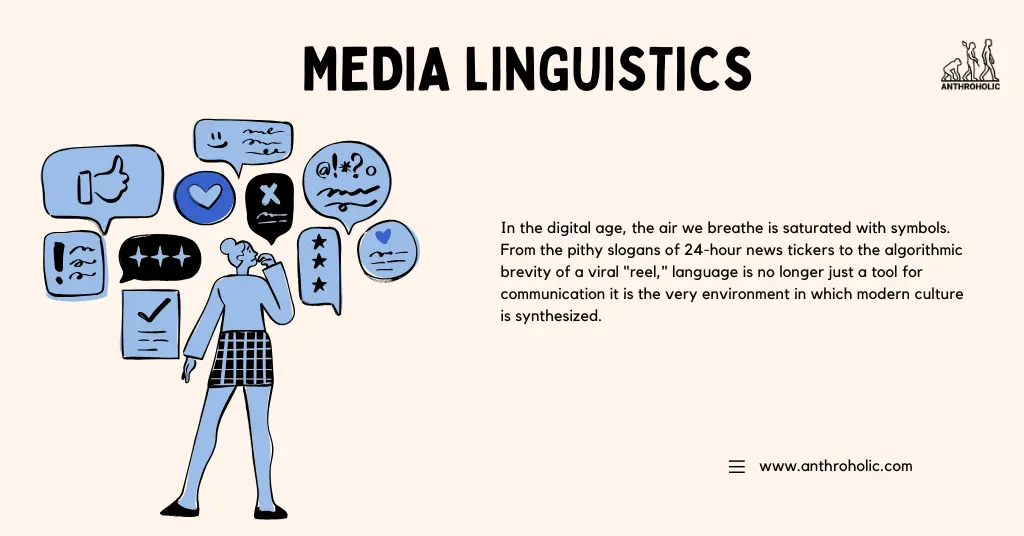
In the digital age, the air we breathe is saturated with symbols. From the pithy slogans of 24-hour news tickers to the algorithmic brevity of a viral "reel," language
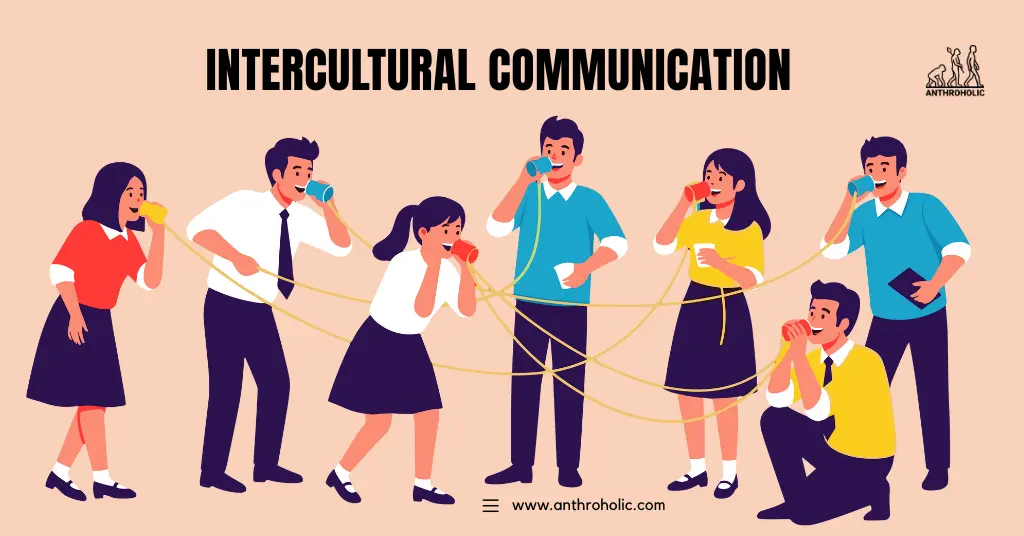
In an increasingly globalized world, the ability to decode the silent languages of culture is no longer just an academic pursuit; it is a survival skill.
Descriptive linguistics is an essential branch of anthropological research focused on the scientific analysis and description of human languages. It involves understanding language in terms of its structure (syntax, semantics, and phonology) and function (how it is used in social contexts) [1].
Developmental psycholinguistics is a specialized field within psycholinguistics that studies how children acquire language. The discipline integrates insights from psychology and linguistics to understand the psychological processes that underlie language acquisition and development.
Transformational Generative Syntax (TGS) is a linguistic theory rooted in the belief that humans have an innate ability for language acquisition and use. Developed by Noam Chomsky in the 1950s, TGS seeks to explain the complex structures and rules governing natural languages.
Language loss, often termed 'language death', refers to the phenomenon when a language loses its last native speaker, thereby becoming extinct. However, this process often occurs gradually, with languages first becoming endangered before completely dying out.
Haptics is the science of touch in human and non-human communication. This study encompasses both the sensation of touch physically received and the technology that aids these interactions. Anthropologically, haptics offers a distinctive lens through which we can explore cultural nuances and variations in human behavior and communication.
Chronemics, the study of the role time plays in communication, is a focal concept in the field of anthropology, where non-verbal communication and cultural norms converge. Anthropologists examine the significance of Chronemics in various cultural contexts, highlighting its impact on interpersonal communication and societal norms.
Proxemics is a branch of anthropology introduced by anthropologist Edward T. Hall in 1963 to describe how human beings use space and how this use of space affects interactions, communication, and social relationships. More broadly, proxemics concerns itself with the ways that people perceive, structure, and utilize the space around them.
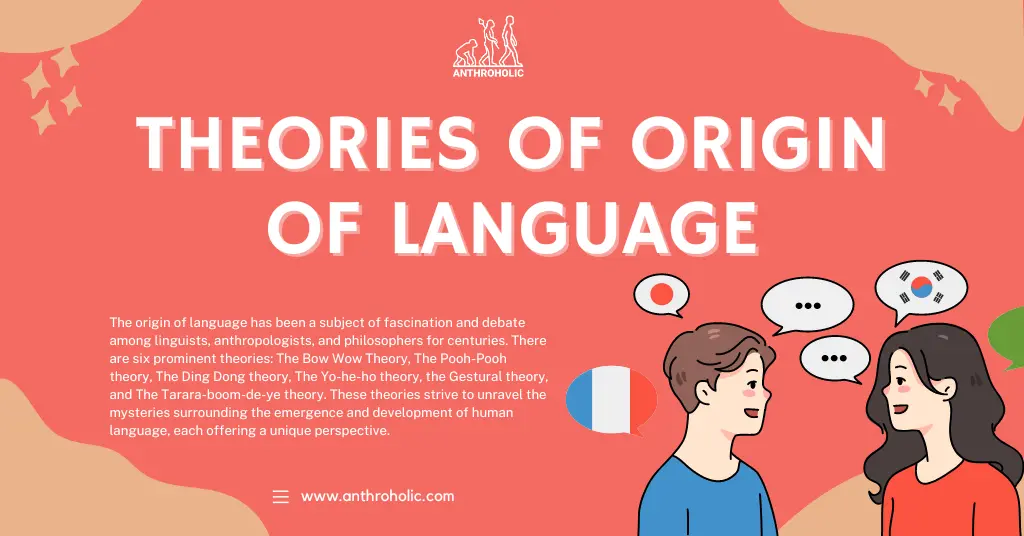
There are six prominent theories of origin of language: The Bow Wow Theory, The Pooh-Pooh theory, The Ding Dong theory, The Yo-he-ho theory, the Gestural theory, and The Tarara-boom-de-ye theory. These theories strive to unravel the mysteries surrounding the emergence and development of human language, each offering a unique perspective.

