All Posts

"Exploring the Diversity of Human Culture: Insights from Anthropology"

Geertz (1973) defined Thick Description as a detailed account of field experiences in which the anthropologist makes explicit the patterns of cultural and social relationships and puts them in context. It is a methodology that explicates not just behaviors, but their context as well, so that they become meaningful to an outsider.

Thick Description

Geertz (1973) defined Thick Description as a detailed account of field experiences in which the anthropologist makes explicit the patterns of cultural and social relationships and puts them in context. It is a methodology that explicates not just behaviors, but their context as well, so that they become meaningful to an outsider.

Gibbons, often referred to as "lesser apes", are members of the primate family Hylobatidae. These agile and highly social creatures stand apart from their larger relatives, the great apes, due to their smaller size and unique characteristics.

Gibbons

Gibbons, often referred to as "lesser apes", are members of the primate family Hylobatidae. These agile and highly social creatures stand apart from their larger relatives, the great apes, due to their smaller size and unique characteristics.

Orangutans, known for their distinctive red fur and intelligent behavior, are among the most fascinating primates on earth. These great apes are primarily found in the rainforests of Borneo and Sumatra, providing a unique perspective into primate behavior and evolution.

Orangutans

Orangutans, known for their distinctive red fur and intelligent behavior, are among the most fascinating primates on earth. These great apes are primarily found in the rainforests of Borneo and Sumatra, providing a unique perspective into primate behavior and evolution.

Social Sanctions play an integral role in maintaining societal norms and values by influencing individual behavior. They can be classified into positive and negative sanctions, each of which has formal and informal variations.

Social Sanction

Social Sanctions play an integral role in maintaining societal norms and values by influencing individual behavior. They can be classified into positive and negative sanctions, each of which has formal and informal variations.

The term 'Industrial Economy' refers to an economic system that heavily relies on manufacturing and industrial activity as its primary source of income. Industrial economies have reshaped global cultures in profound ways.

Industrial Economy

The term 'Industrial Economy' refers to an economic system that heavily relies on manufacturing and industrial activity as its primary source of income. Industrial economies have reshaped global cultures in profound ways.

Agriculture, which represents one of the most critical sectors in human civilization, is the practice of cultivating plants and rearing animals for food, fiber, medicinal plants, and other products used to sustain and enhance life.

Agriculture

Agriculture, which represents one of the most critical sectors in human civilization, is the practice of cultivating plants and rearing animals for food, fiber, medicinal plants, and other products used to sustain and enhance life.

Shifting cultivation, often referred to as swidden agriculture or slash-and-burn farming, is a traditional agricultural practice that involves the rotation of fields rather than crops. Predominant among indigenous populations, it continues to be a prevalent mode of subsistence in various regions worldwide, particularly in tropical rainforest areas of South America, Africa, and Southeast Asia.

Shifting Cultivation

Shifting cultivation, often referred to as swidden agriculture or slash-and-burn farming, is a traditional agricultural practice that involves the rotation of fields rather than crops. Predominant among indigenous populations, it continues to be a prevalent mode of subsistence in various regions worldwide, particularly in tropical rainforest areas of South America, Africa, and Southeast Asia.

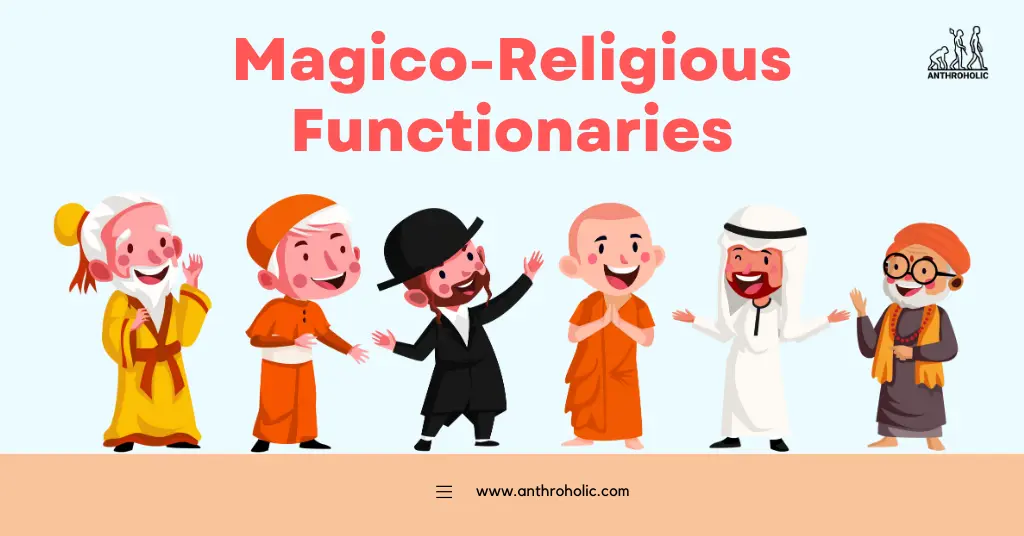
Throughout history, priests and priestesses have played integral roles in their societies, serving as key mediators between the supernatural and the human world. As spiritual figures, they were entrusted with duties ranging from conducting rituals to offering guidance on moral issues.

Priest and Priestess

Throughout history, priests and priestesses have played integral roles in their societies, serving as key mediators between the supernatural and the human world. As spiritual figures, they were entrusted with duties ranging from conducting rituals to offering guidance on moral issues.

Animism, often regarded as the world's oldest religion, originates from Latin 'animus,' meaning 'spirit' or 'soul.' It is a foundational element in many indigenous cultures, predating classical religion and persisting even into the present day

Animism

Animism, often regarded as the world's oldest religion, originates from Latin 'animus,' meaning 'spirit' or 'soul.' It is a foundational element in many indigenous cultures, predating classical religion and persisting even into the present day

Animatism is a complex anthropological concept that concerns the attribution of a generalized, impersonal supernatural power or influence to animals, objects, or phenomena. The concept was initially developed by anthropologist R.R. Marett in 1900, who proposed that animatism is essentially the belief in a widespread, non-personal supernatural power.

Animatism

Animatism is a complex anthropological concept that concerns the attribution of a generalized, impersonal supernatural power or influence to animals, objects, or phenomena. The concept was initially developed by anthropologist R.R. Marett in 1900, who proposed that animatism is essentially the belief in a widespread, non-personal supernatural power.

Manaism represents an intriguing and deeply nuanced belief system often associated with indigenous Polynesian and Melanesian cultures. This system personifies 'mana' as a supernatural force or power that may influence events, people, and objects in the physical world

Manaism

Manaism represents an intriguing and deeply nuanced belief system often associated with indigenous Polynesian and Melanesian cultures. This system personifies 'mana' as a supernatural force or power that may influence events, people, and objects in the physical world

Bongaism is a lesser-known religious belief system, primarily prevalent among certain tribal communities in India, notably the Santal and Munda tribes of Jharkhand, Odisha, and West Bengal. Derived from the word 'Bonga,' which means 'spirit' or 'deity' in the local language, this tribal religion has managed to retain its distinctness despite significant societal changes.

Bongaism

Bongaism is a lesser-known religious belief system, primarily prevalent among certain tribal communities in India, notably the Santal and Munda tribes of Jharkhand, Odisha, and West Bengal. Derived from the word 'Bonga,' which means 'spirit' or 'deity' in the local language, this tribal religion has managed to retain its distinctness despite significant societal changes.