
AI Answer Evaluation Platform Live Now. Try Free Answer Evaluation Now


Matrilineal Descent

Matrilineal descent refers to a system of kinship in which ancestral lineage and inheritance are traced through the female line.
Matrilineal descent refers to a system of kinship in which ancestral lineage and inheritance are traced through the female line.

Bilateral descent, also known as cognatic descent, is a type of kinship system where an individual belongs equally to the father's and mother's lineages

The study of living major primates, a distinct and diverse group of mammals that includes humans, non-human apes, monkeys, and prosimians, provides a deep and comprehensive perspective on evolutionary biology, anthropology, and conservation ecology.

Understanding humanity's biological and cultural evolution necessitates studying the concept of descent, a core notion in the field of anthropology. It represents a social rule that delineates the line through which kinship, inheritance, and social status are traced.

Kinship terminology refers to the systems of classifying and naming familial relationships within a given society. It plays a crucial role in anthropological studies, as it provides insights into the ways in which societies structure and perceive kinship.

Explore various types of kinship, comprehend familial relationships, and learn how these bonds shape human societies across cultures in our enlightening article.

The historical method is a systematic approach used by anthropologists to study and understand the past. It involves the critical examination and interpretation of historical sources such as
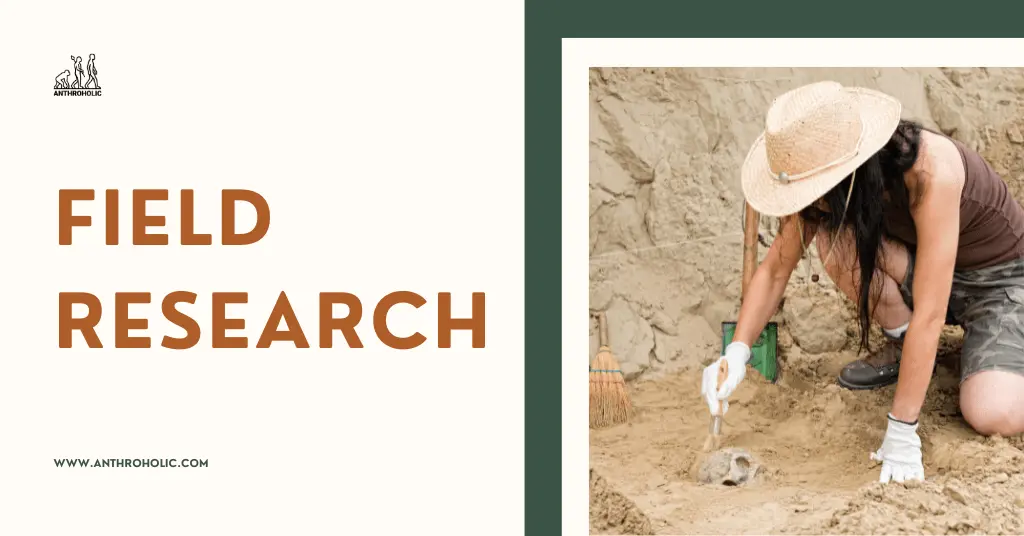
Field research, often referred to as ethnographic research, is an integral aspect of anthropological study that involves the direct observation and participation within a specific cultural or social group

As the socio-cultural landscape evolves, so does the application of the observation method in anthropology. The modern era has seen significant advancements and innovations in this research method.

Qualitative data refers to non-numerical information that captures the 'qualities' of a research subject—people's behaviors, beliefs, values, and social norms

In anthropology, quantitative data involves the collection and analysis of numerical information to reveal patterns, trends, correlations, or generalizations about the human condition.

Anthropomorphism, derived from the Greek anthropos (human) and morphe (form), is a ubiquitous psychological phenomenon where human characteristics are attributed to non-human entities, including animals, objects, and natural phenomena.