AI Answer Evaluation Platform Live Now. Try Free Answer Evaluation Now

Relationship between Anthropology and Sociology
Anthropology and sociology rely on social life and cultural research to fully comprehend the causes and effects of human behavior.

Anthropology and sociology rely on social life and cultural research to fully comprehend the causes and effects of human behavior.
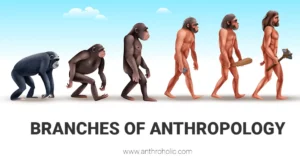
Archaeology, biological or physical anthropology, linguistic anthropology, cultural or social anthropology, and other areas are among the various specialties accessible to anthropologists.

A new epoch known as the Anthropocene is swiftly coming. This notion, which is being studied by climate scientists, geologists, archaeologists, historians, ecologists, and poets, has been embraced by authors, activists, artists, and poets.
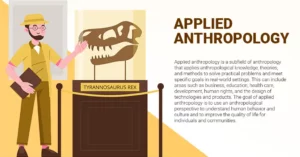
"Applied anthropology" is stated as "anthropology employed to address an issue." Anthropology is in use. Malinowski, the creator of modern anthropology
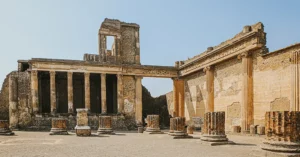
Fundamentally, cultural resource management is a process that gives attention to the protection and management of the many but sparsely distributed components of cultural heritage in a modern world with a growing population and changing needs.
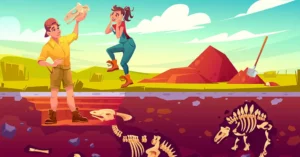
Prehistoric archaeology employs this technique to examine prehistory, the preliterate period of the human race's history. More than 99 percent of human history may be discovered using ancient archaeology or prehistory as a subject of study.
Urban archaeology is a discipline of archaeology that focuses on the material history of towns and cities, where protracted human occupation has frequently left
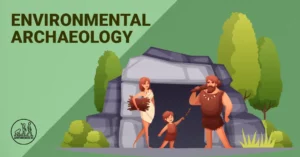
Environmental archaeology is a discipline of archaeology that was originally researched in the 1970s. It is the study of how past civilizations interacted with their environments.
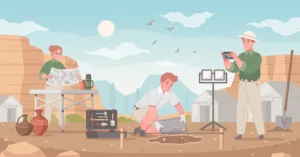
The ethical questions brought up by studying the physical past are called "archaeological ethics." It is a subset of archaeology's philosophy. The preservation of human remains, laws preserving human remains and cultural artifacts, worldwide issues, and preservation and ethnoarchaeology will all be explored in this article.
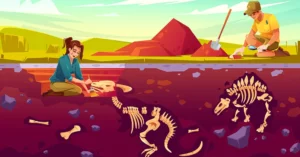
The science of taphonomy explores the ways in which organic residues migrate from the biosphere to the lithosphere. This comprises actions that take place after…
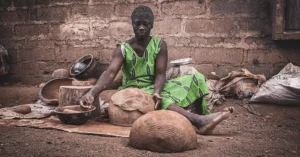
Ethnoarchaeology is the study of people from an anthropological viewpoint for archaeological reasons, frequently via investigating the physical vestiges of a civilization