
AI Answer Evaluation Platform Live Now. Try Free Answer Evaluation Now


Feminist Archaeology
Feminist archaeology is a field of archaeology that originated in the 1970s and 1980s as a reaction to the male-dominated character of the profession.

Feminist archaeology is a field of archaeology that originated in the 1970s and 1980s as a reaction to the male-dominated character of the profession.

Cognitive archaeology is a study of archaeology that aims to understand the mental processes and cognitive abilities of ancient cultures by the analysis of material culture, such as artifacts, architecture, and art.

Archaeological field surveys are a fundamental element of archaeological studies that entail the systematic search, identification, and recording of archaeological sites and other cultural remnants over a terrain.

Gender archaeology, or archaeology of gender, is a branch of archaeology that studies the roles and experiences of women and gender in past societies.

Underwater archaeology is a sub-discipline of archaeology that investigates human cultural and historical events that transpired underwater, such as shipwrecks, submerged cities, and ancient ports.

Archaeological geophysics is a non-invasive technique of assessing archaeological sites by utilizing several geophysical technologies to identify the underlying characteristics and uncover buried archaeological remains.

The purposeful search for and documentation of archaeological remains, such as buildings, artifacts, and other tangible material traces from ancient human groups and civilizations, is known as archaeological excavation.

In this article we talk about the history of archaeology. Archaeology is receiving more scholarly attention.

Paleoethnobotany, also referred to as archaeobotany, utilizes ancient plant remnants that have been uncovered and analyzed to look at past links between people and plants.

The phrase "cultural lag" refers to both the idea that culture often lags behind technological progress and the repercussions of this lag on the socioeconomic system.
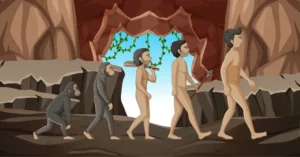
According to the neutral theory of evolution, the bulk of molecular variation has no influence on fitness, so random processes are the most likely cause of genetic variation.

Grave robbery, tomb robbery, or tomb raiding are all words for the act of digging up a grave, tomb, or crypt in order to take valuables.