AI Answer Evaluation Platform Live Now. Try Free Answer Evaluation Now
How People Use Cultural Research to Explore Family Roots, Migration, and Ancestry
Human beings have always sought to understand where they come from. Across continents and generations, people have asked the same questions: Who were our ancestors? What shaped their choices? How did their cultures influence who we are today? Cultural research offers tools to answer these questions with depth and meaning, moving beyond timelines and helping individuals rediscover connections that stretch far into the past.
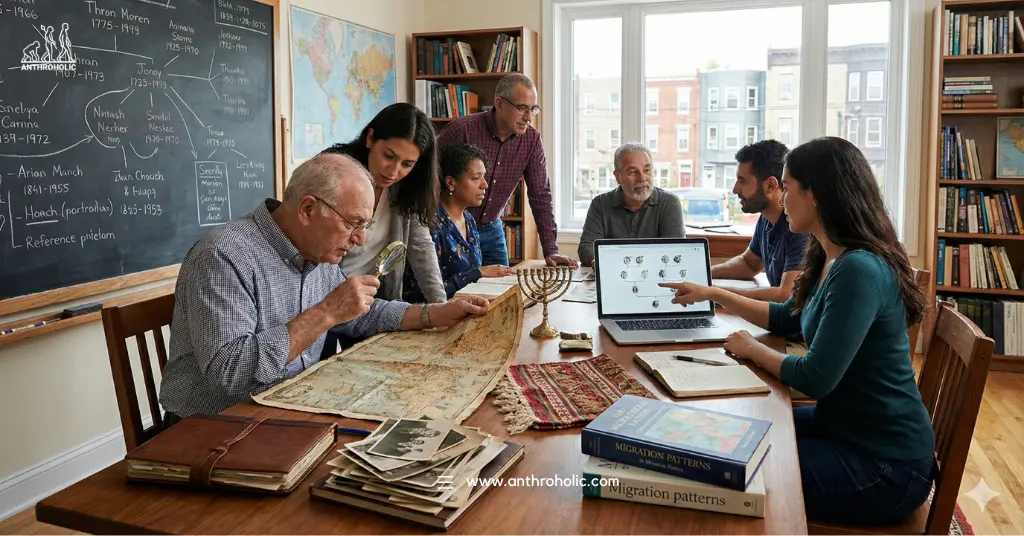
In today’s world of global movement, blended identities, and fading oral traditions, the desire to reclaim ancestry has grown stronger. People don’t just want to know names or dates, they want to understand the stories, beliefs, and cultural forces that shaped their lineage. Cultural research allows individuals to explore how families lived, why they migrated, and what traditions they carried with them.
Why Curiosity About Ancestry Is Rising
Many people feel a growing gap between modern life and the traditions of their families. Migration, mobility, and digital lifestyles often disconnect younger generations from the cultural contexts that once shaped daily life. As a result, more individuals are turning to cultural research to rebuild that connection.
Several factors are driving this renewed interest:
- A desire for belonging. In a highly mobile world, cultural identity helps people anchor themselves.
- Global migration patterns. Families spread across countries want to understand how their ancestors adapted and moved.
- Revival of Indigenous and local traditions. Many communities are reclaiming suppressed or overlooked cultural knowledge.
- Greater access to archives and resources. Digital libraries, museum databases, and oral history projects make research more accessible.
- Intergenerational curiosity. Younger people are asking questions older relatives never had the opportunity to explore.
Cultural research helps people interpret traditions they inherited, songs, recipes, rituals, by placing them within a broader historical and social context.
Adding Meaning to Genealogy Through Cultural Research
A family tree offers structure, but cultural research adds understanding. Names and dates reveal who and when, while cultural context reveals the far more interesting why and how.
Anthropologists often emphasize that individuals exist within cultural systems. When people research their ancestry, they uncover how those systems shaped family lines.
Cultural research brings deeper insight into:
- Social roles and responsibilities. What expectations did ancestors face within their communities?
- Traditions and rituals. What ceremonies marked birth, marriage, or death?
- Economic life. What professions or crafts were tied to clan or community identity?
- Belief systems. What spiritual or cosmological views shaped everyday decisions?
- Historical pressures. How did colonization, industrialization, or political change influence families?
With this context, a family tree becomes a living story, not just a record, but a cultural narrative that explains the logic behind generations of choices.
Learning Research Structure Through Professional Examples
When people begin exploring their ancestry, they quickly discover that cultural research requires organization. Archives hold massive amounts of information, oral histories, migration documents, letters, photographs, ethnographies, and community records. Making sense of these sources often requires a structured research approach.
To understand what strong research looks like, some individuals study examples created by professionals. Whether they examine academic-style analyses or cultural fieldwork reports, these models help them see how experts build well-organized arguments and connect cultural themes.
Many people exploring their ancestry eventually face assignments, essays, or personal research projects that require clear structure and strong analysis. To manage this more effectively, some turn to academic support resources, including services that assist when they need someone to do my thesis for me. These services provide professionally organized research help that demonstrate how to structure arguments, reference cultural sources, and present findings in a coherent way. When used responsibly, they act as study aids that help individuals understand how to handle large amounts of cultural or historical data and turn it into polished, meaningful work.
With this support, their own research becomes easier to organize, more accurate, and far more insightful.
Understanding Migration Through Cultural and Historical Forces
Migration never happens in isolation. Every movement, from village relocations to transcontinental journeys, reflects cultural pressures, social expectations, and environmental realities. Cultural research reveals the context behind these migrations, helping people understand their ancestral stories more deeply.
Anthropologists often study:
- Land inheritance customs that pushed younger family members to move elsewhere
- Marriage alliances that shaped where families settled
- Cultural ideas of prosperity, honor, or duty that motivated relocation
- Community conflict or political restructuring that forced migration
- Environmental challenges such as drought, floods, or resource scarcity
- Labor movements, including industrial work migrations and seasonal travel
Understanding these forces helps people interpret their family history not as a sequence of random moves but as part of larger cultural patterns.
For example:
- A Chinese family’s migration to Southeast Asia may align with clan networks or labor systems.
- A European ancestor who moved cities during the Industrial Revolution likely followed trade shifts or craft guild dynamics.
- A Latin American family migrating within a country might have been influenced by agrarian reforms or mining expansions.
Migration is always connected to culture. Cultural research uncovers that connection.
Preserving Oral Histories Before They Disappear
Oral histories are cultural treasures. They hold emotional memories, symbolic meaning, and generational wisdom that rarely appear in formal documents. Yet these stories are fragile, once an elder passes, irreplaceable knowledge often disappears with them.
Cultural research emphasizes preserving oral histories through:
- recorded interviews,
- story mapping,
- documenting traditional sayings,
- digitizing family letters and photos,
- and transcribing shared memories.
These stories reveal how ancestors interpreted major events, war, migration, love, loss, celebration. They also show how families passed down values, humor, and resilience. Paired with historical context, oral histories provide an intimate view of the past that enriches the entire research process.
Recognizing That Cultural Identity Evolves
As individuals research their heritage, they quickly realize that culture is fluid. Traditions change as families relocate, encounter new communities, adapt to new environments, or mix with other cultures. Identity evolves and takes on new forms while still carrying echoes of the past.
Cultural research helps people:
- see heritage as dynamic rather than fixed,
- understand that cultural change is natural,
- embrace blended or multi-layered identities,
- and appreciate how family stories evolve with each generation.
This perspective relieves the pressure to fit neatly into a single category and instead celebrates the intricate nature of identity.
Why Cultural Research Matters Today
Researching family roots is not simply an academic exercise, it is an act of connection. As people explore cultural history, they uncover wisdom, resilience, and creativity that extend beyond individual lifetimes.
A deeper understanding of ancestry helps people:
- Strengthen family bonds,
- Reclaim hidden or silenced histories,
- Gain confidence through understanding their heritage,
- And appreciate cultural practices that once seemed mysterious or irrelevant.
In a fast-changing world, cultural research provides grounding. It teaches that we are part of a much larger story, one shaped by migration, adaptation, and the cultural values passed down from those who walked before us. By exploring family roots through cultural research, people uncover not just where they come from but why their identity matters.

Related Posts